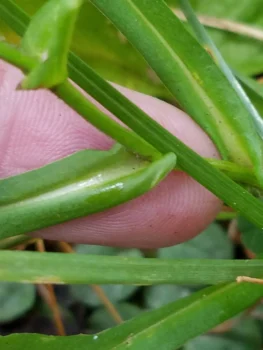
Crookedstem Aster: A Late-Season Native Gem for Your Garden
If you’re looking for a native perennial that delivers when most other flowers are calling it quits for the season, meet the crookedstem aster (Symphyotrichum prenanthoides). This delightful late-bloomer might not win any beauty contests in spring, but come late summer and fall, it transforms into a pollinator magnet that’ll have you wondering why more gardeners don’t know about this hidden gem.
What Makes Crookedstem Aster Special?
Crookedstem aster is a true native perennial forb that calls much of eastern North America home. You might also find it listed under its old scientific name, Aster prenanthoides, but don’t let the name changes fool you – this is the same reliable plant that’s been quietly supporting local ecosystems for centuries.
This perennial reaches about 4 feet tall with an upright, erect growth habit and spreads gently through underground rhizomes. Its blue flowers create a lovely late-season display, and the foliage becomes particularly conspicuous in fall, adding extra seasonal interest to your garden.
Where Does It Grow Naturally?
This aster has quite an impressive native range, stretching across much of eastern North America. You’ll find it naturally growing from Ontario down through states including Connecticut, Delaware, Illinois, Indiana, Iowa, Kentucky, Maryland, Massachusetts, Michigan, Minnesota, New Jersey, New York, North Carolina, Ohio, Pennsylvania, Tennessee, Virginia, West Virginia, and Wisconsin, plus the District of Columbia.
- Species observed
- No observations
A Word About Rarity
Here’s something important to know: in New Jersey, crookedstem aster has a rarity status of Highlands Listed, S2, meaning it’s considered uncommon in that state. If you live in New Jersey or other areas where this plant might be rare, definitely consider adding it to your garden – but please make sure you’re sourcing your plants or seeds from reputable native plant nurseries that practice responsible propagation, not wild collection.
Why Your Garden (and Local Wildlife) Will Love It
Crookedstem aster earns its keep in several ways:
- Late-season pollinator support: When most flowers have finished blooming, this aster provides crucial nectar and pollen for butterflies, bees, and other pollinators preparing for winter
- Low-maintenance native: Once established, it requires minimal care and is adapted to local conditions
- Naturalistic beauty: Perfect for creating that wild meadow look without actually being wild
- Moderate spread: It spreads at a reasonable pace through rhizomes, filling in gaps without becoming aggressive
Growing Conditions: What Does It Need?
The good news is that crookedstem aster isn’t particularly fussy, though it does have some preferences:
- Soil: Prefers medium-textured soils with a pH between 5.5 and 7.2
- Moisture: Medium moisture needs – it’s facultative for wetlands, meaning it’s happy in both wet and drier conditions
- Light: While it’s listed as shade intolerant, it can handle some light shade, though full sun will give you the best flowering
- Hardiness: Cold hardy to about -38°F (roughly USDA zones 3-8)
- Space: Give it room to reach its 4-foot height and spread gradually
Perfect Garden Situations
Crookedstem aster shines in several garden scenarios:
- Native plant gardens: Obviously a natural fit
- Woodland edges: Mimics its natural habitat
- Rain gardens: Its facultative wetland status makes it adaptable to varying moisture levels
- Naturalized areas: Great for that barely managed look that’s actually carefully planned
- Pollinator gardens: Essential for late-season support
Planting and Care Tips
Getting started with crookedstem aster is straightforward:
- Propagation: Can be grown from seed (about 700,000 seeds per pound!) or bare root divisions
- Planting time: Spring or fall planting works well
- Spacing: Plan for 2,700 to 11,000 plants per acre if you’re doing large-scale plantings
- Establishment: Be patient – seedling vigor is low, so it takes time to get established
- Maintenance: Once established, it’s fairly low-maintenance with a moderate growth rate
A Few Things to Keep in Mind
Like any plant, crookedstem aster has its quirks:
- It has a relatively short lifespan for a perennial, so you may need to allow for self-seeding or replanting every few years
- Seedling vigor is low, so direct seeding can be challenging – starting with plants might be easier
- It’s not fire-resistant, so keep that in mind if you live in fire-prone areas
- Commercial availability is limited, so you might need to seek out specialty native plant sources
The Bottom Line
Crookedstem aster may not be the showiest plant in your garden, but it’s the kind of steady, reliable native that forms the backbone of a truly functional landscape. Its late-season blooms provide crucial support for pollinators when they need it most, and its moderate spreading habit means it’ll gradually fill in spaces without taking over.
If you’re building a native plant garden or just want to add some authentic local character to your landscape, crookedstem aster deserves serious consideration. Just remember to source it responsibly, especially if you’re in areas where it’s rare. Your local pollinators will thank you come September!