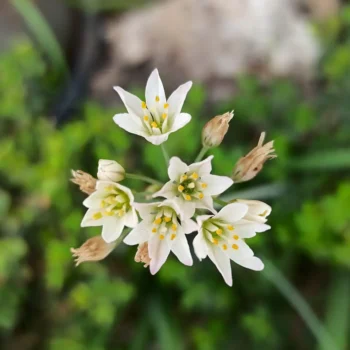
Crowpoison: A Delicate Native Bulb for Natural Gardens
Meet crowpoison (Nothoscordum bivalve), a charming native bulb that might just surprise you with its understated beauty. Despite its somewhat ominous common name, this delicate perennial has been quietly gracing American landscapes for centuries, offering a subtle addition to naturalistic gardens across much of the country.
What Makes Crowpoison Special
Crowpoison is a native herbaceous perennial that belongs to the amaryllis family. This modest forb produces clusters of small, white flowers that dance above grass-like foliage in spring and early summer. While it may not command attention like showier garden stars, its delicate umbels of blooms add a gentle, naturalistic touch that’s perfect for gardeners seeking authentic native character.
You might also encounter this plant listed under its botanical synonyms Allium bivalve or Ornithogalum bivalve in older gardening references, but rest assured—it’s the same charming species.
Where Crowpoison Calls Home
This resilient native has established itself across an impressive range of the United States. You’ll find crowpoison growing naturally in Alabama, Arkansas, Florida, Georgia, Illinois, Indiana, Kansas, Kentucky, Louisiana, Mississippi, Missouri, Nebraska, North Carolina, Ohio, Oklahoma, South Carolina, Tennessee, Texas, and Virginia. Its wide distribution speaks to its adaptability and hardiness.
- Species observed
- No observations
Crowpoison thrives in USDA hardiness zones 6 through 9, making it accessible to gardeners across much of the temperate United States.
Garden Role and Landscape Potential
This native bulb shines in naturalistic settings where its subtle charm can be appreciated. Consider crowpoison for:
- Prairie gardens and wildflower meadows
- Woodland edges and understory plantings
- Native plant gardens
- Natural areas requiring low-maintenance plants
While crowpoison won’t create dramatic focal points, it excels at providing delicate texture and authentic native character to informal landscapes.
Growing Conditions and Care
One of crowpoison’s greatest strengths is its adaptability. This facultative upland plant typically prefers well-drained, non-wetland conditions but can tolerate occasional moisture. It adapts to various soil types and thrives in partial shade to full sun locations.
The species demonstrates good drought tolerance once established, making it suitable for low-water gardens. Its preference for upland conditions means it’s not ideal for rain gardens or consistently wet areas, but it’s perfect for those tricky spots that are neither fully dry nor consistently moist.
Planting and Maintenance
Crowpoison is refreshingly low-maintenance. Plant bulbs in fall for spring blooms, and once established, this perennial largely takes care of itself. The plant readily self-seeds, which can be either a benefit for naturalizing or something to monitor if you prefer controlled plantings.
Minimal watering is needed once the plant is established, and its hardy nature means it rarely requires intervention. This makes it an excellent choice for gardeners seeking beautiful natives that won’t demand constant attention.
Wildlife and Pollinator Benefits
While crowpoison’s flowers may be small, they provide nectar for various small pollinators, including native bees and flies. The plant also serves as a food source for wildlife—research indicates it can comprise 5-10% of large animals’ diets, though it’s infrequently used for cover.
These wildlife connections make crowpoison valuable for gardeners interested in supporting local ecosystems, even if its contributions are more modest than those of larger native plants.
Should You Plant Crowpoison?
Crowpoison is ideal for gardeners who appreciate subtle native beauty and want low-maintenance plants for naturalistic settings. It’s particularly well-suited if you’re creating prairie gardens, woodland edges, or native plant collections where its delicate character can shine.
However, this might not be the plant for you if you prefer bold, showy garden displays or need plants that provide significant visual impact. Its understated nature means it works best as part of diverse native plantings rather than as a standalone feature.
The plant’s tendency to self-seed is worth considering—while this can help establish natural drifts, gardeners preferring highly controlled plantings might find this characteristic challenging.
For those seeking authentic native character, low-maintenance requirements, and gentle pollinator support, crowpoison offers a charming addition to the right garden setting. Its wide native range and adaptability make it accessible to many gardeners, while its modest care needs ensure it won’t become a burden in your landscape.