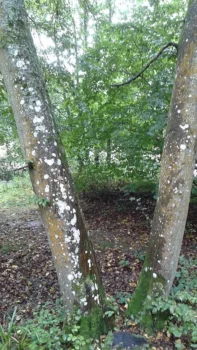
Discovering Cryptothecia striata: The Striped Lichen That’s Already in Your Garden
Have you ever noticed those crusty, whitish patches spreading across tree bark in your yard and wondered what they were? You might be looking at Cryptothecia striata, a fascinating lichen that’s been quietly doing its job as nature’s air quality monitor right under your nose!
What Exactly Is Cryptothecia striata?
Cryptothecia striata is a crustose lichen – essentially a partnership between fungi and algae that creates those distinctive crusty formations you see on tree bark and occasionally on rocks. This isn’t a plant you can buy at the garden center or grow from seed. Instead, it’s a living indicator that appears naturally when conditions are just right.
This species is native to North America and was previously known by the synonym Chiodecton montagnaei. Like many lichens, it doesn’t have widely recognized common names, so most people simply refer to it by its scientific name.
Where You’ll Find This Crusty Character
Cryptothecia striata calls the southeastern United States home, with a particular fondness for Florida and the Gulf Coast region. It thrives in the warm, humid conditions of these areas, making its home on the bark of various trees and sometimes on rock surfaces.
Spotting Cryptothecia striata in Your Landscape
Identifying this lichen is pretty straightforward once you know what to look for:
- Whitish to pale gray crusty patches that seem to grow directly from tree bark
- Relatively smooth surface with subtle striations or lines (hence the name striata)
- Tight adherence to the bark – it won’t peel off easily like some other lichens
- Typically found on the trunks and larger branches of trees
Is This Lichen Beneficial for Your Garden?
Absolutely! While Cryptothecia striata might not produce showy flowers or attract butterflies, it offers some pretty impressive benefits:
- Air quality indicator: Lichens are incredibly sensitive to air pollution, so their presence indicates good air quality in your area
- Ecosystem support: Provides habitat and food for tiny invertebrates and insects
- Natural beauty: Adds interesting texture and natural character to tree bark
- No maintenance required: It takes care of itself completely
The Growing Reality
Here’s where things get interesting – you can’t actually plant or cultivate Cryptothecia striata in the traditional sense. This lichen will appear naturally in your landscape if conditions are suitable. It needs:
- Clean air (it’s very sensitive to pollution)
- Appropriate humidity levels
- Suitable tree bark or rock substrates
- Time – lichens grow incredibly slowly
If you’re seeing this lichen in your yard, congratulations! It means your local environment is healthy and unpolluted.
Should You Be Concerned?
Some gardeners worry when they see crusty growths on their trees, but Cryptothecia striata is completely harmless to plants. It doesn’t parasitize trees or cause any damage – it simply uses the bark surface as a place to live. Think of it as nature’s way of decorating your trees while providing valuable ecosystem services.
Encouraging Natural Lichen Communities
While you can’t plant lichens directly, you can create conditions that support their natural development:
- Avoid using pesticides and herbicides that can harm these sensitive organisms
- Maintain diverse tree species in your landscape
- Avoid disturbing tree bark unnecessarily
- Support clean air initiatives in your community
Cryptothecia striata might not be the showiest addition to your native landscape, but it’s definitely one of the most interesting. Next time you spot those distinctive crusty patches on your trees, take a moment to appreciate this remarkable living partnership that’s been quietly contributing to your garden’s ecosystem all along!