Cumberland Xanthoparmelia Lichen: A Fascinating Rock-Dwelling Native
Have you ever noticed those crusty, grayish patches decorating rocks in natural areas? Meet the Cumberland xanthoparmelia lichen (Xanthoparmelia cumberlandia), a fascinating native organism that’s more complex and beneficial than you might think! While you won’t be planting this little guy in your garden beds, understanding what it is and appreciating its role in nature can deepen your connection to the native ecosystems around us.
What Exactly Is a Lichen?
Before we dive into the specifics of our Cumberland friend, let’s clear up what lichens actually are. Lichens aren’t plants at all – they’re incredible partnerships between fungi and algae (or sometimes cyanobacteria). Think of them as nature’s ultimate roommates, working together to create something neither could accomplish alone. The fungus provides structure and protection, while the algae photosynthesize to create food for both partners.
Meet the Cumberland Xanthoparmelia
Xanthoparmelia cumberlandia, also known by its scientific synonym Parmelia cumberlandia, is a native North American lichen that has made its home primarily in the southeastern United States. This hardy little organism gets its name from the Cumberland region where it was first identified and studied.
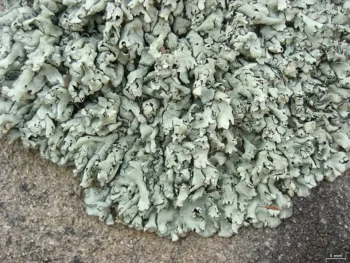
The Cumberland xanthoparmelia forms distinctive gray-green to yellowish crusty patches on exposed rock surfaces. Unlike the fluffy or leafy lichens you might see on tree bark, this species creates a more tightly adhered, crusty appearance that can almost look like someone splashed paint on the rocks.
Is It Beneficial to Your Garden?
While you can’t plant Cumberland xanthoparmelia lichen in your garden (and trust us, it wouldn’t survive transplanting anyway!), its presence in nearby natural areas is actually a wonderful sign for your local ecosystem. Here’s why this little lichen matters:
- Air quality indicator: Lichens are incredibly sensitive to air pollution, so their presence indicates clean, healthy air
- Ecosystem pioneer: They help break down rock surfaces, contributing to soil formation over long periods
- Biodiversity support: While not directly beneficial to pollinators like flowering plants, lichens contribute to overall ecosystem health and complexity
- Natural beauty: They add subtle, natural artistry to rock formations and stone features
How to Identify Cumberland Xanthoparmelia
Spotting this lichen in the wild can be quite rewarding once you know what to look for:
- Location: Look for it on exposed rock surfaces, particularly in areas with good air circulation
- Appearance: Forms crusty, tightly adhered patches that are gray-green to yellowish in color
- Texture: Unlike leafy or shrubby lichens, this species has a distinctly crusty, almost painted-on appearance
- Size: Patches can vary widely but typically form irregular shapes across rock surfaces
Appreciating Nature’s Patience
One of the most remarkable things about lichens like Xanthoparmelia cumberlandia is their incredible patience. These organisms grow extremely slowly – we’re talking millimeters per year in many cases. Some lichen colonies can be hundreds or even thousands of years old! This makes them living historical records of the environments they’ve inhabited.
Supporting Lichen Habitats
While you can’t cultivate Cumberland xanthoparmelia in your garden, you can certainly support lichen habitats in your area:
- Preserve natural rock formations: Avoid disturbing or cleaning natural rock surfaces where lichens grow
- Support clean air initiatives: Since lichens are sensitive to pollution, supporting air quality improvements helps them thrive
- Leave natural areas undisturbed: Resist the urge to tidy up natural spaces where lichens live
- Educate others: Share your newfound appreciation for these fascinating organisms!
The next time you’re hiking or exploring natural areas in the southeastern United States, take a moment to appreciate the Cumberland xanthoparmelia lichen. These remarkable organisms remind us that nature’s most interesting residents aren’t always the showiest – sometimes the most fascinating stories are written in subtle gray-green patches on ancient rocks, telling tales of partnership, patience, and persistence that span decades or even centuries.