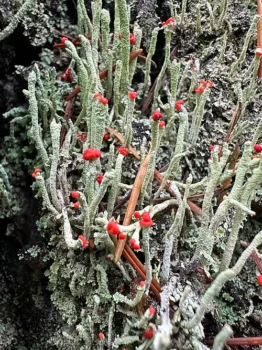
Cup Lichen: The Tiny Ecosystem Engineer You Never Knew Existed
Have you ever wandered through a forest and noticed tiny, cup-shaped structures scattered across the ground like nature’s own miniature chalices? Meet the cup lichen (Cladonia bellidiflora), a fascinating organism that’s neither plant nor animal, but something altogether more mysterious and wonderful.
What Exactly Is Cup Lichen?
Cup lichen isn’t actually a plant at all – it’s a lichen! Lichens are remarkable partnerships between fungi and algae (and sometimes bacteria) that work together to create something entirely unique. The cup lichen gets its name from its distinctive cup-shaped structures called podetia, which look like tiny goblets rising from a carpet of scale-like base material.
This particular species, also known by its synonym Cladonia hookeri, is native to North America and represents one of nature’s most successful collaborations. The fungal partner provides structure and protection, while the algae partner photosynthesizes to create food for both.
Where Does Cup Lichen Call Home?
Cup lichen is a true North American native, thriving in the boreal forests and northern regions of Canada and the northern United States. You’ll typically find these little cups nestled among mosses, growing on acidic soil, or colonizing rotting wood in cool, humid forest environments.
How to Identify Cup Lichen
Spotting cup lichen is like going on a miniature treasure hunt. Here’s what to look for:
- Small, cup-shaped structures (podetia) that are greyish-green in color
- Cups typically measure just a few millimeters to about 1-2 centimeters tall
- Base consists of small, scale-like structures called squamules
- Often grows in clusters or scattered patches
- Found on acidic soil, rotting logs, or among moss communities
Is Cup Lichen Beneficial to Your Garden?
While you can’t exactly plant cup lichen like you would a tomato or rose bush, its presence is actually a wonderful sign for your garden ecosystem. Here’s why cup lichen deserves your appreciation:
- Air quality indicator: Lichens are incredibly sensitive to air pollution, so finding them means your garden has clean air
- Soil health: They help break down organic matter and contribute to soil formation
- Habitat provider: Tiny invertebrates use lichens for shelter and food
- Erosion control: Their growth helps stabilize soil surfaces
Creating Lichen-Friendly Conditions
Rather than trying to cultivate cup lichen directly (which isn’t really possible), you can create conditions that welcome these fascinating organisms naturally:
- Maintain areas of undisturbed, acidic soil
- Avoid excessive fertilization, which can harm lichens
- Keep some fallen logs and organic debris in shaded areas
- Minimize chemical pesticide and herbicide use
- Preserve areas with filtered light and good air circulation
The Bottom Line
Cup lichen might not be the showstopper of your garden, but it’s definitely one of nature’s most interesting supporting actors. If you’re lucky enough to have these tiny cups appearing naturally in your landscape, consider yourself blessed with a healthy ecosystem. They’re a sign that your garden is providing the clean air, appropriate moisture, and chemical balance that support diverse life forms.
Next time you’re exploring a woodland area or even a quiet corner of your own yard, take a moment to crouch down and look for these miniature marvels. Cup lichen reminds us that some of nature’s most incredible partnerships come in very small packages!