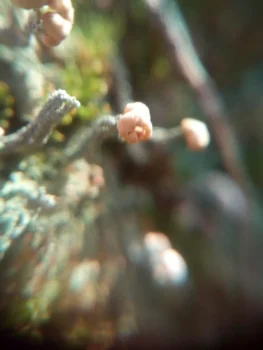
Cup Lichen: The Tiny Goblets Gracing Your Garden’s Forest Floor
Have you ever noticed tiny, pale green cup-shaped structures dotting fallen logs, tree bark, or mossy areas in your woodland garden? Meet Cladonia peziziformis, commonly known as cup lichen – one of nature’s most charming miniature wonders that might already be calling your garden home without you even realizing it!
What Exactly Is Cup Lichen?
Cup lichen isn’t actually a plant at all – it’s a fascinating partnership between a fungus and algae working together in perfect harmony. This collaboration, called symbiosis, creates those distinctive little goblet or cup-shaped structures that give this lichen its common name. Think of them as nature’s tiny chalices, rarely growing more than an inch tall but packed with personality.
You might also encounter cup lichen under some of its scientific synonyms, including Cladonia capitata, Cladonia leptothallina, or Cladonia mitrula, but they’re all referring to the same delightful organism.
Where You’ll Find Cup Lichen
Cup lichen is a proud North American native, naturally occurring throughout eastern regions from southeastern Canada down through the southeastern United States. It’s particularly fond of acidic environments and thrives in the dappled light of woodland settings.
Spotting Cup Lichen in Your Garden
Identifying cup lichen is like going on a miniature treasure hunt. Here’s what to look for:
- Small, cup or goblet-shaped structures, typically grayish-green in color
- Growing on decaying wood, tree bark, or acidic soil
- Usually found in clusters or scattered groups
- Thrives in partially shaded, humid conditions
- Often accompanied by mosses and other small woodland organisms
Is Cup Lichen Beneficial for Your Garden?
Absolutely! While cup lichen won’t provide nectar for butterflies or berries for birds, it serves as an excellent indicator of your garden’s environmental health. Its presence suggests:
- Good air quality (lichens are sensitive to pollution)
- Balanced moisture levels
- A thriving woodland ecosystem
- Natural decomposition processes at work
Cup lichen also adds wonderful textural interest to natural garden areas, creating miniature landscapes that fascinate both children and adults. Some small creatures may use lichen fragments for nesting material, contributing to your garden’s wildlife habitat value.
Can You Grow Cup Lichen?
Here’s where cup lichen differs dramatically from traditional garden plants – you can’t simply plant it and expect it to grow. Lichens appear naturally when environmental conditions are just right, and attempting to transplant them is generally unsuccessful and potentially harmful to existing populations.
Instead of trying to grow cup lichen, focus on creating the conditions where it might naturally establish:
- Maintain partially shaded woodland areas
- Leave fallen logs and branches to decompose naturally
- Avoid using chemical fertilizers or pesticides in natural areas
- Ensure good air circulation and moderate humidity
- Practice minimal disturbance gardening in woodland zones
The Perfect Garden Settings for Cup Lichen
Cup lichen naturally fits into:
- Woodland gardens with native trees and understory plants
- Natural areas left largely undisturbed
- Moss gardens and shaded rock features
- Areas around decaying logs or stumps
- Native plant restoration sites
Caring for Areas Where Cup Lichen Lives
The best care for cup lichen is benign neglect combined with environmental stewardship:
- Avoid walking on or disturbing lichen colonies
- Don’t rake or clean up natural debris where lichens grow
- Maintain good air quality by avoiding chemical sprays nearby
- Allow natural moisture cycles without supplemental watering
- Protect from compaction and excessive foot traffic
A Tiny Marvel Worth Celebrating
While you might not add cup lichen to your shopping list like you would other garden plants, discovering these miniature marvels in your woodland areas is cause for celebration. They’re living proof that your garden provides habitat for some of nature’s most fascinating partnerships – and that’s something worth appreciating, one tiny cup at a time.
So next time you’re wandering through the shadier corners of your garden, take a moment to crouch down and look for these charming little goblets. You might just find yourself with a new appreciation for the incredible diversity that makes native gardens so special.