Cup Lichen: The Tiny Ecosystem Engineer in Your Garden
Have you ever noticed small, cup-shaped structures dotting the forest floor or quietly colonizing bare soil in your garden? Meet the cup lichen (Cladonia ramulosa), one of nature’s most fascinating and beneficial organisms that’s probably been living in your landscape longer than you think!
What Exactly Is Cup Lichen?
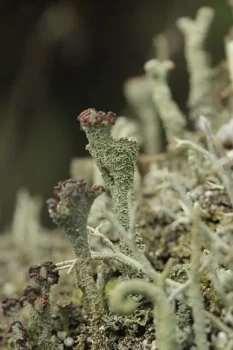
Cup lichen isn’t actually a plant at all – it’s a remarkable partnership between fungi and algae working together as one organism. This symbiotic relationship creates those distinctive pale gray-green to whitish cup-shaped structures, called podetia, that typically grow 1-3 centimeters tall. Think of them as nature’s tiny goblets scattered across the ground, creating intricate miniature landscapes that add subtle beauty to any natural area.
You might also encounter this species under its scientific synonyms Cladonia anomaea or Cladonia pityrea in older field guides, but they’re all referring to the same wonderful little organism.
Where Cup Lichen Calls Home
Cup lichen is proudly native to North America, with a range that spans from Canada down through the United States. You’ll find these hardy little cups thriving in temperate and boreal regions, where they’ve been quietly doing their important ecological work for thousands of years.
Why Cup Lichen Is Your Garden’s Unsung Hero
While you can’t exactly plant cup lichen like you would a tomato or rose bush, having these little organisms appear naturally in your landscape is actually a wonderful sign! Here’s why you should celebrate their presence:
- Soil stabilizers: Their tiny structures help prevent soil erosion and create stable growing surfaces for other plants
- Nitrogen fixers: Like natural fertilizer factories, they help enrich the soil by converting atmospheric nitrogen into forms plants can use
- Environmental indicators: Their presence often indicates good air quality and a healthy ecosystem
- Pioneer species: They help prepare disturbed soil for other plants to eventually take root
Spotting Cup Lichen in the Wild
Cup lichen loves to make its home on soil, decaying wood, and organic matter in forests and open areas where there’s adequate moisture. Look for these telltale signs:
- Small, hollow cup or funnel-shaped structures
- Pale gray-green to whitish coloration
- Usually found in clusters or scattered groups
- Typically 1-3 centimeters in height
- Often accompanied by other lichen species
Creating Lichen-Friendly Conditions
While you can’t cultivate cup lichen like traditional garden plants, you can encourage their natural establishment by:
- Reducing chemical inputs: Avoid pesticides and fertilizers in areas where you’d like to see lichens flourish
- Maintaining moisture: Lichens need periodic moisture to photosynthesize and grow
- Limiting disturbance: Leave some areas of your landscape undisturbed to allow natural colonization
- Improving air quality: Since lichens are sensitive to pollution, reducing local air pollutants helps them thrive
The Bottom Line
Cup lichen may be small and easily overlooked, but it’s a powerhouse contributor to healthy ecosystems. Rather than trying to remove these beneficial organisms, consider them a sign that your landscape is supporting biodiversity and natural processes. The next time you spot these tiny cups in your garden or on a nature walk, take a moment to appreciate the complex partnership between fungi and algae that makes their existence possible – and the important role they play in keeping our environment healthy!