Cup Lichen: The Fascinating Fungal-Algal Partnership in Your Yard
Have you ever noticed tiny, cup-shaped structures growing on old wood or acidic soil in shaded areas of your property? Meet the cup lichen, scientifically known as Cladonia scabriuscula – a remarkable organism that’s neither plant nor animal, but something wonderfully unique.
What Exactly Is Cup Lichen?
Cup lichen belongs to a fascinating group of organisms that challenge our typical understanding of life forms. Unlike the flowering plants we usually discuss in gardening, lichens are actually a symbiotic partnership between fungi and algae (or cyanobacteria). The fungal partner provides structure and protection, while the algal partner creates food through photosynthesis – it’s nature’s ultimate teamwork!
This particular species is native to North America and can be found naturally occurring across the continent in suitable habitats. You might also see it referred to by its scientific synonym, Cladonia macroptera Rasanen.
Where You’ll Find Cup Lichen
Cup lichen thrives in North America’s diverse ecosystems, from boreal forests to temperate woodlands. It’s particularly fond of acidic environments and can often be spotted growing on decaying logs, stumps, soil, and sometimes rocks in shaded or partially shaded areas.
Identifying Cup Lichen in Your Landscape
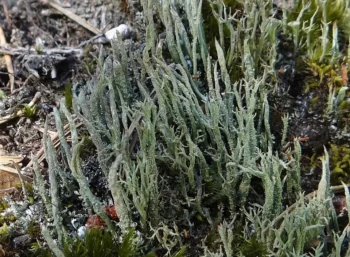
Spotting cup lichen is like discovering tiny fairy goblets scattered throughout your yard! Here’s what to look for:
- Small, cup-shaped structures called podetia that rise from a crusty base
- Greyish-green to pale green coloration
- Scaly, rough-textured surface (hence scabriuscula, which means somewhat rough)
- Size typically ranges from a few millimeters to about an inch tall
- Often grows in small colonies or clusters
Is Cup Lichen Beneficial to Your Garden?
While you can’t exactly plant cup lichen like you would a perennial, its presence is actually a wonderful indicator of environmental health! Here’s why having cup lichen around is a good thing:
- Air quality indicator: Lichens are sensitive to air pollution, so their presence suggests clean air in your area
- Soil health: They help break down organic matter and contribute to soil formation over time
- Ecosystem support: While not a pollinator magnet (lichens don’t flower), they do provide habitat and food sources for various small invertebrates
- Natural beauty: They add subtle, understated charm to woodland gardens and natural landscapes
Creating Conditions Where Cup Lichen Thrives
Rather than trying to cultivate cup lichen directly, you can create conditions that welcome its natural occurrence:
- Maintain shaded or partially shaded areas with good air circulation
- Leave some decaying wood and organic debris in place
- Avoid using chemical fertilizers or pesticides in areas where you’d like lichens to establish
- Keep soil slightly acidic (lichens generally prefer pH levels below 7)
- Be patient – lichens grow very slowly and may take years to establish visible colonies
Living Harmoniously with Cup Lichen
If you discover cup lichen in your landscape, consider yourself lucky! These slow-growing organisms are incredibly sensitive to environmental changes, so their presence indicates you’re providing a healthy habitat. The best approach is simply to appreciate them and avoid disturbing the areas where they grow.
Remember, cup lichen isn’t something you’ll find at your local nursery – it’s a gift from nature that appears when conditions are just right. So next time you’re exploring the quieter corners of your property, keep an eye out for these tiny, cup-shaped treasures. They’re a reminder that some of the most fascinating life forms are also the most understated!