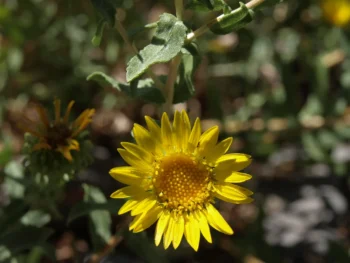
Curlycup Gumweed: A Hardy Native Wildflower for Low-Maintenance Gardens
If you’re looking for a tough, drought-tolerant native plant that delivers late-season color while supporting pollinators, curlycup gumweed (Grindelia squarrosa var. serrulata) might just be your new garden hero. This unassuming wildflower packs a punch with its cheerful yellow blooms and remarkable resilience.
What Is Curlycup Gumweed?
Curlycup gumweed is a native North American forb that belongs to the sunflower family. As a forb, it’s an herbaceous plant without woody stems – think of it as nature’s version of a hardy perennial flower. The plant can behave as an annual, biennial, or perennial depending on growing conditions, making it quite adaptable to different garden situations.
You might also encounter this plant listed under its synonym, Grindelia serrulata, in older gardening references or seed catalogs.
Native Range and Distribution
This remarkable plant is truly native to both Canada and the lower 48 United States, with an impressive natural range spanning from British Columbia to Ontario in Canada, and extending through much of the western and central United States. You’ll find it naturally occurring in states from Arizona and California in the southwest, through the Great Plains states like Colorado, Nebraska, and the Dakotas, and even reaching as far east as Michigan, Ohio, and Pennsylvania.
- Species observed
- No observations
Why Plant Curlycup Gumweed?
There are several compelling reasons to consider adding this native wildflower to your landscape:
- Pollinator magnet: The bright yellow composite flowers bloom from late summer into fall, providing crucial late-season nectar for bees, butterflies, and other pollinators when many other flowers have finished blooming
- Drought tolerance: Once established, this plant can handle dry conditions with minimal supplemental watering
- Low maintenance: As a native species, it’s naturally adapted to local conditions and requires little care
- Extended bloom time: Flowers from summer through fall, providing long-lasting garden interest
- Wildlife support: Beyond pollinators, the plant provides habitat and food sources for various native wildlife
Garden Design and Landscape Use
Curlycup gumweed shines in naturalized landscapes and prairie-style gardens. It’s an excellent choice for:
- Prairie and meadow plantings
- Xeriscaping and drought-tolerant landscapes
- Wildflower gardens
- Pollinator gardens
- Restoration projects
- Low-maintenance border plantings
The plant works beautifully when mass-planted or scattered throughout a wildflower meadow, where its cheerful yellow blooms can create drifts of late-season color.
Growing Conditions and Care
One of the best things about curlycup gumweed is how easy it is to grow. Here’s what it needs to thrive:
Sunlight: Full sun is preferred, though it can tolerate some light shade
Soil: Well-drained soils are essential. This plant actually prefers lean, sandy, or rocky soils over rich garden soil
Water: Drought tolerant once established. In fact, too much water can cause problems
USDA Hardiness Zones: Zones 3-9, making it suitable for most of North America
Planting and Establishment Tips
Getting curlycup gumweed established in your garden is straightforward:
- Seeding: Direct seed in fall or early spring. The seeds need a period of cold stratification, so fall planting often works best
- Site preparation: Choose a sunny location with good drainage. Avoid areas that stay wet
- Spacing: Allow adequate room for the plant to spread naturally
- First year care: Water occasionally during the first growing season to help establishment, then reduce watering
- Ongoing maintenance: Very little needed once established. The plant may self-seed in favorable conditions
Potential Considerations
While curlycup gumweed is generally well-behaved, keep in mind that it can self-seed readily in favorable conditions. In a formal garden setting, you might want to deadhead spent flowers if you prefer to control its spread. However, in naturalized areas, allowing it to self-seed can create beautiful drifts over time.
The Bottom Line
Curlycup gumweed is an excellent choice for gardeners who want to support native wildlife while enjoying a low-maintenance, drought-tolerant plant. Its late-season blooms fill an important ecological niche, providing nectar when many other flowers have finished for the year. Whether you’re creating a prairie garden, establishing a pollinator haven, or simply want a tough plant that can handle challenging growing conditions, this native wildflower deserves serious consideration.
By choosing curlycup gumweed, you’re not just adding a beautiful plant to your landscape – you’re supporting local ecosystems and creating habitat for native wildlife. Now that’s what we call a win-win!