Cursed Buttercup: A Wetland Native with Mixed Garden Appeal
With a name like cursed buttercup, you might wonder if Ranunculus sceleratus is something you’d actually want in your garden. This unassuming wetland native has quite the reputation, but before you write it off entirely, let’s explore what this unique plant brings to the table—and whether it deserves a spot in your landscape.
Meet the Cursed Buttercup
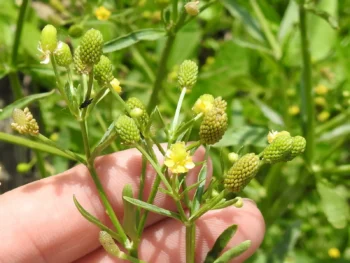
Cursed buttercup (Ranunculus sceleratus) is a small, yellow-flowered member of the buttercup family that’s perfectly at home in soggy soils. As an herbaceous forb that can behave as either an annual or perennial, this plant grows up to 2 feet tall with a rapid growth rate during its active period in spring and summer.
The plant produces small, bright yellow flowers that are certainly cheerful, though at only about 3-8mm across, they won’t make much of a statement in your garden. Its deeply divided, palmate leaves give it a delicate, ferny appearance, but let’s be honest—this isn’t going to win any beauty contests.
Where Does It Call Home?
One of the most remarkable things about cursed buttercup is its incredible geographic range. This hardy native can be found across virtually all of North America, from Alaska and the Canadian territories down through all the lower 48 states. It’s truly a continental success story, thriving in wetland habitats from coast to coast.
- Species observed
- No observations
The Wetland Specialist
Here’s where cursed buttercup really shines (or demands respect, depending on your perspective): it’s classified as an Obligate Wetland species across every region of North America. This means it almost always occurs in wetlands and requires consistently moist to wet soils to thrive.
Key growing requirements include:
- High moisture conditions—this plant has zero drought tolerance
- Full sun to partial shade (shade tolerant)
- Soil pH between 4.8 and 8.4
- Hardy in USDA zones 2-9
- Minimum 90 frost-free days
- Adaptable to various soil textures from coarse to fine
Should You Plant Cursed Buttercup?
The honest answer? Probably not, unless you have very specific needs. Here’s why:
The case against: Cursed buttercup lacks significant ornamental appeal. Its flowers are tiny, its growth habit can look weedy, and it spreads moderately by seed. With no commercial availability and limited aesthetic value, most gardeners will find better options for their landscapes.
The case for: If you’re creating a naturalized wetland garden, bog garden, or working on ecological restoration, cursed buttercup could play a valuable role. As a native species, it supports local ecosystems and provides food sources for small insects and pollinators, even if it’s not a showstopper.
Growing Cursed Buttercup Successfully
If you’ve decided this unique wetland native fits your specialized garden needs, here’s how to grow it:
Propagation: Cursed buttercup is grown exclusively from seed, with about 25,000 seeds per pound. Seeds can be direct-sown in spring or fall, and seedlings show medium vigor once established.
Planting tips:
- Choose a consistently wet location—think pond edges, rain gardens, or bog areas
- No special soil preparation needed; it adapts to various soil types
- Scatter seeds in fall for spring germination
- Expect moderate self-seeding once established
Care requirements: This is truly a plant it and forget it species—as long as you can provide consistently wet conditions. It requires no fertilization, has medium fertility requirements, and will take care of itself once established in the right environment.
The Bottom Line
Cursed buttercup is one of those plants that’s more interesting than beautiful. While it won’t win any garden design awards, it’s a remarkable example of a tough, adaptable native that has found success across an entire continent. For most gardeners, there are more attractive native wetland plants to choose from. But if you’re working on habitat restoration or want to support the complete ecosystem of native wetland plants, cursed buttercup certainly has its place.
Just remember: with great moisture comes great responsibility. This plant needs wet feet year-round, making it suitable only for specialized garden situations. But in the right spot, it’ll reward you with cheerful yellow blooms and the satisfaction of growing a true North American native.