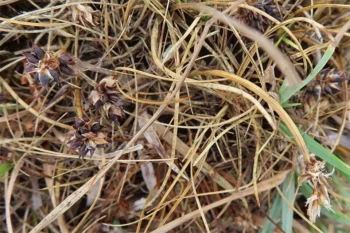
Curved Sedge: An Arctic Beauty for the Adventurous Gardener
Meet the curved sedge (Carex maritima), a hardy little plant that calls some of the world’s most remote and challenging environments home. This perennial sedge might just be one of the toughest plants you’ll ever encounter – and one of the most specialized to grow.
What Exactly Is Curved Sedge?
Curved sedge is a grass-like perennial that belongs to the sedge family. Don’t let the grass-like description fool you though – sedges are their own unique group of plants with triangular stems (remember: sedges have edges!). This particular species gets its common name from its distinctively curved, arching leaves that form attractive, dense tufts.
You might also see this plant listed under its synonym, Carex incurva, in older botanical references.
Where Does Curved Sedge Call Home?
This is where things get really interesting. Curved sedge is native to some of the most remote places on Earth – Alaska, northern Canada (including Alberta, British Columbia, Manitoba, Ontario, Quebec, Saskatchewan, Yukon, Northwest Territories, and Nunavut), Greenland, and even the tiny islands of St. Pierre and Miquelon. We’re talking about true Arctic and subarctic territory here!
- Species observed
- No observations
Should You Grow Curved Sedge in Your Garden?
Here’s the honest truth: curved sedge is not your typical garden plant. This arctic native is adapted to extremely harsh conditions that are nearly impossible to replicate in most home gardens. However, if you’re an adventurous gardener with very specific conditions, it might be worth considering.
Who Should Consider This Plant?
Curved sedge might be perfect for you if:
- You live in USDA hardiness zones 1-5 (the colder, the better)
- You’re creating a specialized arctic or alpine plant collection
- You have a rock garden or coastal garden with challenging conditions
- You enjoy the challenge of growing unusual, native plants
- You need erosion control in a cold, harsh location
Growing Conditions: Arctic Tough
If you’re determined to try growing curved sedge, here’s what you need to know about its preferences:
- Temperature: Thrives in cool to cold conditions year-round
- Soil: Prefers sandy or gravelly, well-draining soils
- Moisture: Can handle both wetland and non-wetland conditions (it’s classified as facultative in Alaska)
- Salt tolerance: Excellent – it can handle coastal salt spray with ease
- Light: Full sun to partial shade
The Wildlife Connection
While curved sedge may not be a pollinator magnet (sedges are wind-pollinated), it does provide valuable habitat benefits in its native range. The dense tufts offer shelter for small wildlife, and the seeds can provide food for birds in harsh arctic environments.
Planting and Care Tips
Growing curved sedge outside its native range is challenging, but here are some tips if you want to try:
- Start with plants from a reputable native plant nursery
- Plant in spring when soil can be worked
- Ensure excellent drainage – soggy conditions in warm weather can be fatal
- Provide protection from hot summer sun in warmer zones
- Be patient – this plant grows slowly and may take time to establish
- Consider container growing in colder climates where you can control conditions
The Bottom Line
Curved sedge is definitely a plant for the specialist gardener. If you live in the far north or are passionate about native arctic plants, it could be a fascinating addition to your collection. However, for most gardeners, there are easier native sedges that will provide similar benefits with much less fuss.
If you’re interested in native sedges but want something more garden-friendly, consider looking into other Carex species native to your specific region. Your local native plant society can point you toward sedges that will thrive in your area while still providing that authentic, wild look that makes native plants so appealing.
Remember, successful native gardening is about choosing the right plant for your specific conditions – and curved sedge definitely falls into the very specific conditions category!