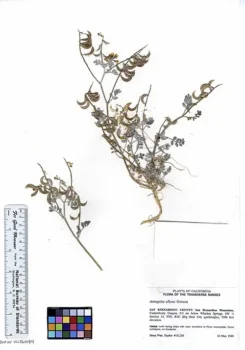
Cushenbury Milkvetch: A Rare California Native in Need of Protection
Meet the cushenbury milkvetch (Astragalus albens), one of California’s most endangered wildflowers. This tiny annual herb might not be the showstopper you’re looking for in your garden, but its story is absolutely fascinating – and heartbreaking. Before you even think about adding this plant to your wish list, there’s something crucial you need to know about its conservation status.
A Plant on the Brink
Here’s the reality check: cushenbury milkvetch is critically imperiled with a Global Conservation Status of S1, meaning there are typically 5 or fewer known populations with very few remaining individuals (less than 1,000 total). In the United States, it’s classified as Endangered. This isn’t a plant you can casually grow in your backyard – it’s a species fighting for survival.
Where This Rare Beauty Calls Home
Astragalus albens is endemic to California, specifically found in the San Bernardino Mountains region. This native plant has evolved to thrive in very specific conditions that are incredibly difficult to replicate outside its natural habitat.
- Species observed
- No observations
What Makes It Special (And Challenging)
As an annual member of the pea family, cushenbury milkvetch produces small, delicate white to cream-colored flowers that are typical of milkvetches. While these blooms may attract native bees and other small pollinators in the wild, the plant’s extremely specialized habitat requirements make it unsuitable for typical garden cultivation.
Why You Shouldn’t Plant It (But Should Care About It)
Given its endangered status, we strongly recommend against attempting to grow cushenbury milkvetch unless you’re part of an official conservation program with access to responsibly sourced material. Here’s why:
- Removing seeds or plants from wild populations could further threaten the species
- It requires very specific soil conditions (carbonate substrates) that are nearly impossible to recreate
- As an annual, it has complex germination requirements tied to its native ecosystem
- Growing conditions in typical gardens won’t support this specialized plant
How You Can Help Instead
Rather than trying to grow this rare gem, consider these alternatives:
- Support organizations working on habitat conservation in the San Bernardino Mountains
- Plant other California native milkvetches that aren’t endangered
- Create habitat for pollinators using appropriate regional natives
- Learn about and advocate for endangered species protection
Native Alternatives for Your Garden
If you’re drawn to milkvetches for their pollinator benefits and pea-family charm, consider these California natives that are more garden-appropriate:
- Woolly locoweed (Astragalus purshii) – where appropriate for your region
- Other locally native Astragalus species (check with local native plant societies)
- Native lupines and other pea family members suitable for your area
The Bottom Line
Cushenbury milkvetch represents the critical importance of habitat conservation. While we can’t bring this endangered beauty into our gardens, we can appreciate its unique place in California’s biodiversity and work to protect the wild spaces where it struggles to survive. Sometimes the best way to love a plant is to leave it in peace and support its conservation from afar.
Remember: gardening with natives is wonderful, but gardening responsibly with appropriate natives is even better. Let’s save our gardening enthusiasm for plants that can thrive in cultivation while supporting conservation efforts for those that need wild spaces to survive.