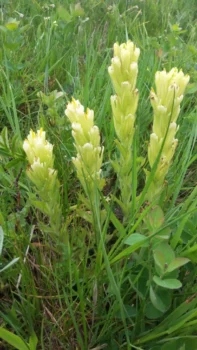
Cusick’s Indian Paintbrush: A Golden Gem for Western Native Gardens
If you’ve ever hiked through the mountain meadows of the American West and been stopped in your tracks by splashes of brilliant golden-yellow flowers, chances are you’ve encountered Cusick’s Indian paintbrush (Castilleja cusickii). This stunning native wildflower brings a burst of sunshine to gardens while supporting local wildlife—though it definitely marches to the beat of its own drum when it comes to growing requirements.
What Makes Cusick’s Indian Paintbrush Special?
Cusick’s Indian paintbrush is a perennial forb that’s as beautiful as it is unique. Unlike many garden plants, this native wildflower is what botanists call hemiparasitic—it partially relies on other plants for nutrients by tapping into their root systems. Don’t worry though, it’s not a garden villain! This relationship is completely natural and actually helps create diverse, healthy plant communities.
The plant produces clusters of bright golden-yellow bracts (the colorful parts that look like flowers) from late spring through summer. These eye-catching displays can reach 12-24 inches tall and spread about 8-12 inches wide, making them perfect accent plants rather than foundation specimens.
Where Does It Naturally Grow?
This gorgeous native calls the western regions of North America home, naturally occurring across Alberta, British Columbia, Idaho, Montana, Nevada, Oregon, Washington, and Wyoming. It thrives in the diverse landscapes of this region, from mountain meadows to sagebrush steppes.
- Species observed
- No observations
Why Plant Cusick’s Indian Paintbrush?
There are several compelling reasons to consider adding this native beauty to your garden:
- Pollinator magnet: Hummingbirds absolutely adore the tubular flowers, and native bees and butterflies visit regularly
- Drought tolerance: Once established, it requires minimal water—perfect for water-wise landscaping
- Native plant benefits: Supports local ecosystems and provides authentic regional character
- Unique beauty: The golden bracts create stunning displays that stand out from typical garden flowers
- Low maintenance: Perennial nature means it returns year after year
Best Garden Settings
Cusick’s Indian paintbrush shines in specific garden styles:
- Native plant gardens: Pairs beautifully with other western natives like lupines and penstemons
- Wildflower meadows: Adds golden punctuation marks among grasses and other wildflowers
- Rock gardens: The moderate size works well among stones and alpine plants
- Xeriscape gardens: Drought tolerance makes it ideal for water-conscious landscapes
Growing Conditions and Care
Here’s where Cusick’s Indian paintbrush gets a bit particular—but don’t let that scare you off!
Sunlight: Requires full sun for best flowering and growth
Soil: Prefers well-draining soils with neutral to slightly alkaline pH. Avoid heavy clay or constantly moist conditions
Water: Drought tolerant once established, but appreciates occasional deep watering during extremely dry periods
Hardiness: Thrives in USDA zones 4-8, handling both cold winters and hot summers
Planting and Establishment Tips
Fair warning: Cusick’s Indian paintbrush isn’t the easiest native to establish, but the results are worth the effort!
- Start with seeds: This species is notoriously difficult to transplant, so direct seeding is your best bet
- Plant with companions: Since it’s hemiparasitic, include native grasses or other compatible plants nearby
- Timing matters: Sow seeds in fall for natural cold stratification, or cold-treat seeds for 6-8 weeks before spring planting
- Be patient: Establishment can take 2-3 years, but mature plants are long-lived
- Minimal fertilizer: Avoid high-nitrogen fertilizers, which can actually harm this adapted native
Potential Challenges
Let’s be honest about the hurdles you might face:
- Difficult establishment: Low germination rates and slow initial growth require patience
- Parasitic nature: Needs compatible host plants to thrive long-term
- Regional adaptation: May not perform well outside its native range
- Limited availability: Specialty native plant nurseries may be your only source
The Bottom Line
Cusick’s Indian paintbrush isn’t for every gardener or every garden, but for those in the western regions looking to create authentic native landscapes, it’s a golden opportunity. The bright blooms, pollinator benefits, and drought tolerance make it a valuable addition to specialized native gardens.
If you’re up for the challenge of growing something truly unique and are committed to supporting native ecosystems, give Cusick’s Indian paintbrush a try. Your local hummingbirds will thank you, and you’ll have bragging rights to one of the West’s most beautiful wildflowers right in your own backyard.
Just remember: patience and the right growing companions are key to success with this charismatic native!