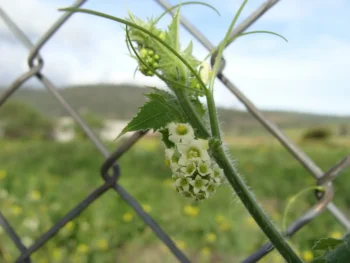
Cutleaf Bur Cucumber: A Quirky Native Vine for Southwest Gardens
Meet the cutleaf bur cucumber (Sicyos laciniatus), a charming little native vine that’s probably flying under your gardening radar. This unassuming annual herb might not win any beauty contests, but it brings authentic Southwest character to naturalized gardens and native plant landscapes.
What Exactly Is Cutleaf Bur Cucumber?
Don’t let the name fool you – this isn’t your typical cucumber! Cutleaf bur cucumber is a native annual vine that belongs to the cucumber family, but it’s more interested in sprawling across the ground or climbing nearby plants than producing anything you’d want in your salad. The cutleaf part of its name comes from its distinctively lobed leaves that look like they’ve been artistically carved, while the bur refers to its small, spiky seed pods.
As an annual forb herb, this plant completes its entire life cycle in one growing season, making it a come-and-go character in your garden story.
Where Does It Call Home?
This southwestern native keeps things simple when it comes to geography. You’ll find cutleaf bur cucumber naturally growing in Arizona and Texas, where it has adapted to the region’s unique climate and growing conditions. It’s a true child of the American Southwest, evolved to thrive in conditions that might challenge other plants.
- Species observed
- No observations
Should You Invite This Vine to Your Garden Party?
Here’s the honest truth: cutleaf bur cucumber isn’t going to be the star of your flower bed. Its small white flowers are pretty understated, and its overall appearance is more wild and scrappy than polished and pristine. But that doesn’t mean it doesn’t have its place!
You might love it if you:
- Are creating a native plant garden focused on authentic Southwest species
- Want ground cover for naturalized or wild areas of your landscape
- Appreciate plants with interesting leaf shapes and textures
- Are working on a xeriscaping project that celebrates local flora
- Enjoy supporting native pollinators, even with modest blooms
You might want to pass if you:
- Prefer showy, colorful flowers in your main garden beds
- Need a formal, manicured landscape appearance
- Live outside its native range (Arizona and Texas)
- Want a perennial plant that returns year after year
Growing Your Own Cutleaf Bur Cucumber
If you’ve decided this quirky native deserves a spot in your landscape, here’s how to make it happy:
Climate and Zones: This heat-loving annual thrives in USDA hardiness zones 8-10, perfectly suited for its native Southwest territory.
Light and Location: Give it full sun to partial shade. It’s not particularly fussy, but it performs best with good morning sun and some protection from intense afternoon heat.
Soil Preferences: Well-draining soil is key – this plant has zero tolerance for soggy conditions. It actually prefers drier conditions once established, making it perfect for water-wise gardens.
Planting Tips: Direct seed in spring after the last frost danger has passed. Scatter seeds where you want them to grow, as this annual doesn’t love being transplanted.
Care and Maintenance
Here’s where cutleaf bur cucumber really shines – it’s refreshingly low-maintenance! Once your plants are established, they need minimal water and virtually no fertilizer. In fact, too much pampering might make them grow too lush and reduce their natural drought tolerance.
Keep an eye out for self-seeding. Like many annuals, cutleaf bur cucumber may drop seeds for next year’s garden, though germination can be spotty depending on conditions.
Wildlife and Pollinator Benefits
While the flowers might be small, they do attract minor pollinators like small native bees and flies. It’s not a major pollinator magnet, but every little bit helps in supporting local ecosystem health.
The Bottom Line
Cutleaf bur cucumber won’t transform your garden into a showstopper, but it offers something perhaps more valuable – authentic regional character and a connection to your local ecosystem. If you’re gardening in Arizona or Texas and want to celebrate truly native plants, this humble vine deserves consideration for naturalized areas of your landscape.
Remember, the most sustainable gardens often include a mix of spectacular showoffs and humble supporting players. Sometimes the quiet natives are the ones doing the most important work behind the scenes.