Cutleaf Waterparsnip: A Delicate Native for Your Water Garden
If you’re looking to add some delicate, fernlike texture to your wetland garden or pond margin, cutleaf waterparsnip (Berula erecta) might just be the charming native you’ve been searching for. This lesser-known perennial brings an understated elegance to water features with its finely dissected foliage and clusters of tiny white flowers.
Meet the Cutleaf Waterparsnip
Cutleaf waterparsnip goes by several scientific synonyms, including Berula incisa and Berula pusilla, but regardless of what you call it, this native beauty has some specific needs that make it perfect for certain garden situations and completely wrong for others.
This perennial herb typically reaches about 2.8 feet tall and grows with an upright, single-crown form. True to its name, the leaves are deeply cut and dissected, giving the plant a delicate, almost ferny appearance that provides lovely textural contrast in the garden.
Where Does It Call Home?
Cutleaf waterparsnip is native to both Canada and the lower 48 states, with a broad distribution across the western and central portions of North America. You can find it naturally growing in British Columbia, Ontario, and across numerous U.S. states including Arizona, California, Colorado, Idaho, Montana, Utah, Washington, and many others throughout the Great Plains and Midwest regions.
- Species observed
- No observations
The Wetland Specialist
Here’s where things get interesting (and crucial for your garden planning): cutleaf waterparsnip is classified as an Obligate Wetland plant across all regions where it grows. This means it almost always occurs in wetlands and has very specific moisture requirements. Don’t even think about planting this one in your average garden bed – it needs consistently wet conditions to thrive.
This wetland requirement makes it perfect for:
- Bog gardens and constructed wetlands
- Rain gardens in consistently moist areas
- Pond and stream margins
- Wetland restoration projects
- Areas with natural springs or seeps
Growing Cutleaf Waterparsnip Successfully
If you have the right wet conditions, cutleaf waterparsnip can be a delightful addition to your landscape. Here’s what you need to know:
Soil Requirements: This plant adapts well to fine and medium-textured soils but doesn’t do well in coarse, sandy soils. It can handle acidic conditions (pH 4.9-6.9) and has high tolerance for anaerobic (oxygen-poor) soil conditions – perfect for those soggy spots!
Light and Temperature: Cutleaf waterparsnip is shade intolerant, meaning it needs full sun to perform its best. It’s quite cold hardy, tolerating temperatures down to -33°F, making it suitable for USDA hardiness zones 3-8. It needs at least 85 frost-free days to complete its growing cycle.
Water Needs: This is a high-moisture plant with zero drought tolerance. Think feet wet at all times rather than occasional watering.
Seasonal Interest and Wildlife Value
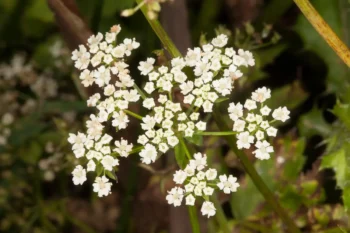
Cutleaf waterparsnip shows its active growth during summer, producing small white flowers in umbrella-like clusters (umbels) during mid-summer. While the flowers aren’t particularly showy from a distance, they’re quite charming up close and attract various small pollinators including flies, small bees, and beneficial wasps.
The plant has a rapid growth rate once established, though it doesn’t spread vegetatively – reproduction happens through seeds. Speaking of seeds, there are about 2.5 million seeds per pound, and they have moderate spread rates, so you might see some self-seeding in appropriate conditions.
Propagation and Availability
Here’s one potential drawback: there’s currently no known commercial source for cutleaf waterparsnip seeds or plants. If you want to grow this native, you’ll need to source seeds from wild populations (with proper permission, of course) or connect with native plant societies or seed exchanges.
The plant can be grown from seed, which should be sown in summer when fresh. Seeds don’t require cold stratification, and seedlings show medium vigor once they get going.
Important Safety Note
Cutleaf waterparsnip is noted as having slight toxicity. While this shouldn’t be a major concern for most gardeners, it’s worth keeping in mind if you have curious pets or small children who might be tempted to nibble on plants.
Is Cutleaf Waterparsnip Right for Your Garden?
This native beauty is perfect for gardeners who:
- Have naturally wet areas or constructed wetlands
- Want to create habitat for small pollinators
- Appreciate subtle, naturalistic plantings
- Are working on wetland restoration projects
- Need plants that can handle waterlogged, anaerobic soils
However, it’s probably not the best choice if:
- You have average garden conditions without consistent moisture
- You’re looking for showy, dramatic flowers
- You want something readily available at the local nursery
- You have a shaded garden (this one needs full sun)
Cutleaf waterparsnip may not be the flashiest native plant, but for the right garden situation, it offers delicate beauty, native credibility, and valuable habitat for small pollinators. If you have a wet spot that needs a charming native touch, this overlooked gem might be exactly what you’re looking for.