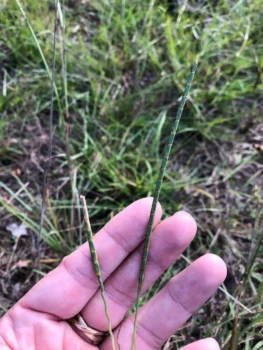
Cylinder Jointtail Grass: A Subtle Native Beauty for Naturalistic Gardens
If you’re looking for a native grass that won’t steal the spotlight but will quietly do its job in your landscape, meet cylinder jointtail grass (Coelorachis cylindrica). This perennial grass might not win any beauty contests, but it’s got staying power and a whole lot of practical benefits for the right garden setting.
What Is Cylinder Jointtail Grass?
Cylinder jointtail grass is a native perennial grass that calls the southeastern and south-central United States home. You might also see it listed under its scientific synonyms like Manisuris cylindrica or Mnesithea cylindrica in older references, but don’t let that confuse you – it’s the same reliable grass.
This fine-textured grass grows in a rhizomatous pattern, meaning it spreads underground to form colonies. At maturity, it reaches about 3.2 feet tall with an erect, upright growth habit. The foliage is green with a fine texture that creates a soft, naturalistic appearance in the landscape.
Where Does It Grow Naturally?
As a true native of the lower 48 states, cylinder jointtail grass naturally occurs across a wide swath of the southeastern and south-central regions. You’ll find it growing wild in Alabama, Arkansas, Florida, Georgia, Kansas, Louisiana, Mississippi, Missouri, North Carolina, Oklahoma, South Carolina, and Texas.
- Species observed
- No observations
Why Consider Cylinder Jointtail Grass for Your Garden?
Here’s where this grass really shines – it’s incredibly adaptable and low-maintenance. Once established, cylinder jointtail grass is quite drought tolerant and has low fertility requirements, making it perfect for those set it and forget it areas of your landscape.
Growing Conditions It Loves:
- Soil adaptability: Happy in coarse, medium, or fine-textured soils
- pH range: Tolerates acidic conditions (pH 4.0-7.0)
- Moisture: Low water needs once established
- Sun exposure: Intermediate shade tolerance, but prefers more sun
- Climate: Hardy to -23°F and needs at least 160 frost-free days
Perfect Garden Roles
Cylinder jointtail grass isn’t your typical ornamental showstopper, but it excels in naturalistic settings. Consider it for:
- Native plant gardens where you want authentic regional character
- Prairie restorations and meadow plantings
- Erosion control on slopes or disturbed areas
- Rain gardens and bioswales (it’s facultative, meaning it can handle both wet and dry conditions)
- Low-maintenance ground cover in informal landscapes
The Reality Check: What to Expect
Let’s be honest – cylinder jointtail grass is more about function than flash. The flowers are small, green, and inconspicuous, blooming in summer. The seeds are brown and equally subtle. This grass has a moderate growth rate and moderate lifespan, so it’s not going to transform your landscape overnight or last for decades without some natural regeneration.
The plant spreads vegetatively at a moderate rate but seed spread is slow, and seedling vigor is low. This means establishment can take patience, but once it’s settled in, it’ll stick around reliably.
Growing and Care Tips
The good news? Cylinder jointtail grass is pretty easygoing once you understand its preferences.
Getting Started:
- Propagation is typically by seed (about 275,000 seeds per pound!)
- No cold stratification required for germination
- Plant in spring when soil temperatures warm up
- Be patient – initial establishment is slow
Ongoing Care:
- Very low fertilizer needs – actually prefers lean soils
- Drought tolerant once established, but provide water during establishment
- No special pruning needed – cut back in late winter if desired
- Root depth is relatively shallow (minimum 6 inches), so avoid deep cultivation nearby
Wildlife and Ecological Benefits
While we don’t have specific data on wildlife benefits for cylinder jointtail grass, native grasses like this one typically provide important habitat value. They offer nesting material for birds, shelter for small wildlife, and their root systems help support soil health and prevent erosion.
The Bottom Line
Cylinder jointtail grass won’t win awards for showy blooms or dramatic foliage, but it’s a solid choice for gardeners who want authentic native character with minimal fuss. If you’re creating a naturalistic landscape, restoring prairie habitat, or need reliable ground cover for challenging sites, this adaptable grass deserves consideration.
Just remember – this is a plant for patient gardeners who appreciate subtle beauty and ecological function over immediate visual impact. In the right setting, cylinder jointtail grass will quietly do its job year after year, asking for little and giving back plenty in terms of authentic regional character and low-maintenance reliability.