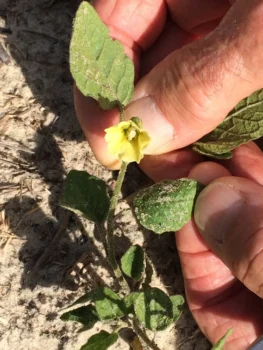
Cypresshead Groundcherry: A Hidden Gem for Southern Native Gardens
If you’re looking for a unique native plant that’s a little off the beaten path, meet the cypresshead groundcherry (Physalis arenicola). This charming little perennial might not be the most famous member of the groundcherry family, but it’s definitely worth getting to know – especially if you’re passionate about supporting truly local ecosystems in the Southeast.
What Is Cypresshead Groundcherry?
Cypresshead groundcherry is a native perennial forb that calls the southeastern United States home. As a forb, it’s basically an herbaceous plant – meaning it doesn’t have woody stems like shrubs or trees, but instead dies back to the ground each winter and returns fresh in spring. Think of it as nature’s own little groundcover with a delightful surprise: those characteristic papery lanterns that give groundcherries their charm.
You might also see this plant listed under its botanical synonyms Physalis arenicola var. ciliosa or Physalis ciliosa in older references, but they’re all the same wonderful plant.
Where Does It Call Home?
This southeastern native has a relatively limited range, naturally occurring in Alabama, Florida, Georgia, and Mississippi. It’s particularly fond of sandy coastal areas, which gives you a clue about the kind of growing conditions it prefers.
- Species observed
- No observations
Why Grow Cypresshead Groundcherry?
Here’s where things get interesting – and important. Cypresshead groundcherry has a conservation status of S3?, which means its population status is somewhat uncertain but potentially sensitive. This makes it an excellent choice for gardeners who want to support native biodiversity, but it also means we need to be thoughtful about how we go about it.
Here’s what makes this plant special for your garden:
- True native status supporting local ecosystems
- Attractive small yellow flowers that bloom throughout the growing season
- Unique papery seed pods that add textural interest
- Low-growing groundcover habit perfect for filling spaces
- Pollinator-friendly flowers that attract native bees and other beneficial insects
- Drought tolerance once established
Perfect Garden Scenarios
Cypresshead groundcherry shines in several garden settings:
- Native plant gardens: Essential for authentic southeastern ecosystems
- Coastal gardens: Naturally adapted to sandy, challenging conditions
- Wildlife gardens: Provides food and habitat for native species
- Naturalized areas: Perfect for areas where you want a wild but managed look
- Rock gardens: Thrives in well-drained, sandy conditions
Growing Conditions and Care
The good news? Once you understand what cypresshead groundcherry wants, it’s relatively low-maintenance.
Climate: Hardy in USDA zones 8-10, making it perfect for the Deep South and coastal areas.
Soil: Sandy, well-drained soil is essential. This plant evolved in coastal areas, so it’s adapted to fast-draining conditions. Heavy clay or constantly moist soil will likely spell trouble.
Light: Full sun to partial shade, though it tends to perform best with at least 6 hours of direct sunlight.
Water: Drought tolerant once established, but appreciates occasional deep watering during extended dry periods.
Planting and Care Tips
Given its potentially sensitive conservation status, always source cypresshead groundcherry from reputable native plant nurseries that propagate their own plants rather than wild-collecting. Never harvest from wild populations.
Here’s how to set your plants up for success:
- Plant in spring after the last frost date
- Amend heavy soils with coarse sand to improve drainage
- Space plants about 12-18 inches apart for groundcover effect
- Water regularly the first year while roots establish
- Minimal fertilization needed – these plants are adapted to lean soils
- Allow some seed pods to remain for natural reseeding
- Light pruning in late winter to remove dead material
The Bottom Line
Cypresshead groundcherry is a fantastic choice for southeastern gardeners who want to grow something truly special and locally native. Its rarity makes it even more valuable as a garden plant – you’ll be helping preserve a piece of your region’s natural heritage while enjoying a unique and attractive groundcover.
Just remember the golden rule: always source responsibly from nurseries that propagate their own plants. This way, you can enjoy this lovely native while helping ensure it continues to thrive in both wild spaces and thoughtfully designed gardens.