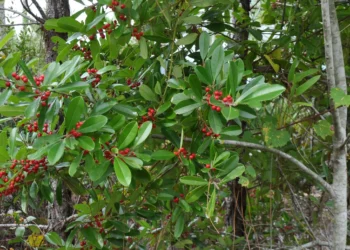
Dahoon: A Native Holly Perfect for Southern Gardens
Looking for a low-maintenance evergreen that’ll make your garden look polished year-round while supporting local wildlife? Meet the dahoon (Ilex cassine), a native holly that’s been quietly beautifying Southern landscapes for centuries. This charming shrub might not be the flashiest plant on the block, but it’s got staying power – and those bright red berries are absolutely stunning against winter’s gray backdrop.
What Makes Dahoon Special?
Dahoon is a perennial evergreen shrub that typically grows as a multi-stemmed plant, though it can occasionally develop into a small single-stemmed tree under the right conditions. Don’t let its modest yellow spring flowers fool you – this plant saves its real show for fall and winter when clusters of bright red berries light up the landscape. The glossy, dark green foliage provides a perfect backdrop for these colorful fruits, which often persist well into the winter months.
Where Dahoon Calls Home
This holly is native to the southeastern United States, naturally occurring in Alabama, Florida, Georgia, Louisiana, Mississippi, North Carolina, South Carolina, and Texas. It’s also been introduced to Hawaii and Puerto Rico, where it has naturalized. In its native range, dahoon thrives in USDA hardiness zones 8-11, making it perfect for gardeners in warmer climates.
- Species observed
- No observations
Why Your Garden (and Local Wildlife) Will Love Dahoon
Here’s where dahoon really shines – it’s practically maintenance-free once established. This shrub has a moderate growth rate and can reach up to 26 feet tall at maturity, though most garden specimens stay smaller. The dense foliage provides excellent screening and structure in the landscape, while those inconspicuous spring flowers offer nectar for bees and other small pollinators.
The real wildlife magic happens when the berries ripen. These bright red fruits are beloved by birds, providing crucial food sources during fall and winter months when other food can be scarce.
Perfect Spots for Planting Dahoon
Dahoon is incredibly versatile in the landscape. Consider it for:
- Native plant gardens and naturalized woodland areas
- Rain gardens and other moisture-loving plant communities
- Privacy screens and hedges (it tolerates pruning well)
- Specimen plantings where you want year-round structure
- Wildlife gardens focused on supporting local birds
- Coastal landscapes where it can handle some environmental stress
Growing Conditions: What Dahoon Craves
The secret to happy dahoon? Think swamp edge rather than desert. This holly is classified as facultative wetland, meaning it usually occurs in wetlands but can adapt to drier sites. Here’s what it needs:
- Moisture: Consistent moisture is key – dahoon has low drought tolerance
- Soil: Acidic soils (pH 3.5-6.5) are preferred, but it adapts to various soil textures
- Light: Shade tolerant, making it perfect for woodland gardens
- Temperature: Needs at least 200 frost-free days and can handle temperatures down to about 12°F
- Drainage: Can handle poorly drained soils and even periodic flooding
Planting and Care Tips
Getting dahoon established is straightforward:
- When to plant: Spring or fall, when temperatures are moderate
- Soil prep: Ensure consistent moisture and slightly acidic conditions
- Spacing: Allow 6-10 feet between plants for hedging, more for specimen plantings
- Watering: Keep consistently moist, especially during the first few years
- Fertilizing: Low fertility requirements – a light application of acidic fertilizer in spring is plenty
- Pruning: Minimal pruning needed, but it responds well if shaping is desired
- Mulching: A thick layer of organic mulch helps retain moisture
A Few Things to Keep in Mind
While dahoon is generally problem-free, there are a few considerations. The berries are slightly toxic if consumed in large quantities, so keep this in mind if you have curious pets or small children. Also, if you’re gardening outside its native range, consider choosing local native alternatives that will better support your regional ecosystem.
For gardeners in the Southeast, dahoon offers the perfect combination of beauty, wildlife value, and low maintenance. It’s one of those reliable plants that’ll anchor your landscape for decades while quietly supporting the local ecosystem – and those winter berries are just the cherry on top!