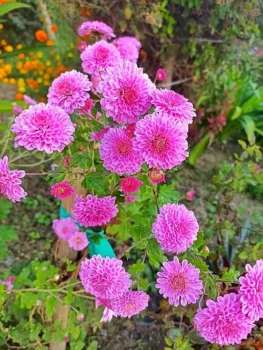
Daisy (Chrysanthemum): A Hardy Perennial for Northern Gardens
If you’re looking for a resilient flowering perennial that can handle tough northern climates, the daisy known botanically as Chrysanthemum might just be your new garden companion. This hardy forb brings classic daisy charm to gardens across some of the most challenging growing regions in North America.
What Makes This Daisy Special?
Chrysanthemum is a perennial forb herb, meaning it’s a non-woody vascular plant that comes back year after year. Unlike shrubs or trees, this plant lacks significant woody tissue and keeps its growing buds right at or below ground level – a smart survival strategy for harsh climates!
Where You’ll Find It Growing Wild
This particular daisy species has an interesting native range that spans the northern reaches of North America. It’s native to Alaska and Canada, making it perfectly adapted to cold climates and short growing seasons. You’ll find it growing wild across British Columbia, Alaska, Manitoba, Ontario, Quebec, Yukon, Northwest Territories, and Nunavut. Interestingly, it also pops up in some scattered locations in the lower 48 states including California, Massachusetts, New York, Ohio, and Pennsylvania, though its native status in these southern locations is undefined.
- Species observed
- No observations
Should You Plant It in Your Garden?
Here’s where things get a bit tricky for gardeners. While this daisy appears to be a robust northern native, there’s limited specific information available about many key growing characteristics. What we do know is promising:
- It’s a hardy perennial that returns each year
- It’s adapted to challenging northern climates
- It has the classic appeal of daisy flowers
- It appears to have no known invasive or noxious status
The Information Gap Challenge
Unfortunately, detailed growing information for this specific Chrysanthemum is quite limited. Key details like preferred soil conditions, sun requirements, mature size, bloom time, and specific care instructions aren’t well-documented in readily available sources. This makes it challenging to provide specific planting and care guidance.
What This Means for Gardeners
If you’re gardening in the northern regions where this plant is native (particularly Alaska, Canada, or northern border states), and you happen to find this specific species available from a reputable native plant source, it could be worth trying. However, given the limited growing information available, you might want to consider these alternatives:
- Look for well-documented native daisy species in your specific region
- Consult with local native plant societies or extension offices
- Consider other proven native perennials with similar appeal
A Word of Caution
The name Chrysanthemum can be confusing because many plants once classified in this genus have been moved to other genera over the years. If you’re shopping for native plants, make sure you’re getting exactly what you expect by working with knowledgeable native plant specialists who can confirm the specific species and its true native status in your area.
The Bottom Line
While this northern daisy appears to be a legitimate native species with no problematic invasive tendencies, the lack of detailed growing information makes it a bit of a mystery plant for most gardeners. If you’re in its native range and passionate about growing truly local species, it might be worth investigating further with local experts. For most gardeners, however, choosing a well-documented native daisy species with proven garden performance might be the more practical path to beautiful, sustainable landscaping.