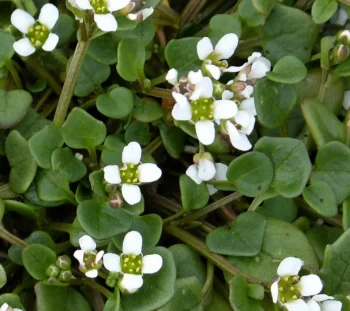
Danish Scurvygrass: A Hardy Arctic Native for Cold Climate Gardens
If you’re gardening in the far north and looking for a truly resilient native plant, Danish scurvygrass (Cochlearia groenlandica) might just be your new best friend. This unassuming little plant has been thriving in some of the world’s harshest conditions for thousands of years, and it’s ready to bring that same toughness to your garden.
What is Danish Scurvygrass?
Danish scurvygrass is a small, hardy forb—essentially a non-woody flowering plant that stays close to the ground. Don’t let the name fool you; this isn’t actually a grass at all! It’s a member of the mustard family, and like its relatives, it produces clusters of tiny white flowers that may look delicate but are surprisingly tough.
This little survivor can live as an annual, biennial, or perennial depending on growing conditions, showing just how adaptable it really is. The plant forms low rosettes of succulent-like leaves that help it conserve water and survive in harsh arctic conditions.
Where Does It Come From?
Danish scurvygrass is a true North American native with an impressive range. It calls home to Alaska, much of Canada (including British Columbia, Manitoba, Ontario, Quebec, Yukon, Northwest Territories, Nunavut, Labrador, and Newfoundland), Greenland, and even dips down into some northern areas of the lower 48 states including California, Oregon, and Washington. It’s also native to St. Pierre and Miquelon.
- Species observed
- No observations
Should You Plant Danish Scurvygrass?
The honest answer? It depends on where you live. This plant is a specialist that evolved for life in the arctic and subarctic, so it’s not going to be happy in your typical temperate garden. However, if you’re gardening in USDA zones 1-5 and want a truly authentic native plant that can handle whatever winter throws at it, Danish scurvygrass could be perfect.
Here’s what makes it appealing:
- Extremely cold hardy (we’re talking survive-in-Alaska hardy)
- Low maintenance once established in the right conditions
- Authentic native plant for northern regions
- Interesting historical significance (it was traditionally used to prevent scurvy)
- Attracts small pollinators adapted to cold climates
Garden Design and Landscape Role
Danish scurvygrass isn’t going to be the star of your perennial border, but it has its place. This plant shines in:
- Rock gardens with arctic or alpine themes
- Native plant gardens in northern regions
- Specialized cold-climate collections
- Educational gardens focusing on traditional or indigenous plants
Think of it as a living piece of arctic history rather than a traditional ornamental. It’s perfect for gardeners who appreciate plants with stories and don’t mind working with something a little unconventional.
Growing Conditions
Here’s where things get specific. Danish scurvygrass has very particular needs:
Climate: This plant needs cool temperatures year-round. If your summers regularly hit 80°F or higher, this probably isn’t the plant for you.
Water: As a facultative wetland plant, it usually grows in moist conditions but can tolerate some drying. Think consistently moist but not waterlogged.
Soil: Well-draining soil is essential, even though it likes moisture. Sandy or rocky soils that drain well but don’t dry out completely work best.
Light: Full sun to partial shade, depending on your climate. In warmer areas of its range, some afternoon shade might help.
Planting and Care Tips
If you’re determined to try growing Danish scurvygrass, here are some tips for success:
- Start with seeds if possible, as this plant can be difficult to transplant
- Plant in early spring or fall when temperatures are cool
- Choose the coolest, most protected spot in your garden
- Provide consistent moisture without waterlogging
- Don’t fertilize heavily—this plant is adapted to lean soils
- Be patient—it may take time to establish
Keep in mind that this plant has a global conservation status that suggests it’s not common everywhere it grows, so if you can find seeds or plants, make sure they’re from a reputable source that practices responsible collection.
Wildlife and Pollinator Benefits
While Danish scurvygrass might not attract butterflies like a typical garden flower, it does provide nectar for small, cold-adapted pollinators including flies and small bees that are active in arctic conditions. If you’re creating habitat for northern wildlife, this plant adds authenticity to your efforts.
The Bottom Line
Danish scurvygrass is definitely a specialist plant for specialized conditions. If you live in a cold climate and are passionate about native plants, it could be a fascinating addition to your garden. Just don’t expect it to behave like your typical garden flower—this is a plant that marches to the beat of its own arctic drum.
For most gardeners, there are probably easier native alternatives that will give you more bang for your buck. But if you’re the type of gardener who gets excited about growing something truly unique with an amazing survival story, Danish scurvygrass might be exactly what you’re looking for.