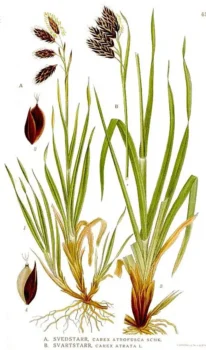
Darkbrown Sedge: A Hardy Arctic Native for Cool Climate Gardens
If you’re gardening in the far north and looking for a tough, low-maintenance ground cover that can handle whatever winter throws at it, meet darkbrown sedge (Carex atrofusca). This unassuming little perennial might not win any flashy flower contests, but it’s got character – and the kind of rugged dependability that makes northern gardeners smile.
What Is Darkbrown Sedge?
Darkbrown sedge is a small, tufted perennial that belongs to the sedge family – think of it as grass’s tough-as-nails cousin. True to its name, this plant produces distinctive dark brown to blackish flower spikes that give it a unique, almost mysterious appearance in the garden. The fine-textured foliage forms neat little clumps that stay relatively compact, making it a well-behaved addition to any planting scheme.
Where Does It Come From?
This hardy sedge is a true native of North America’s most challenging regions. You’ll find it naturally growing across Alaska, and throughout northern Canada including Manitoba, Ontario, Quebec, Yukon, Northwest Territories, Nunavut, Labrador, and Newfoundland. It even calls Greenland home! If that doesn’t tell you this plant can handle cold, nothing will.
- Species observed
- No observations
Why Plant Darkbrown Sedge?
Here’s where this little sedge really shines. If you’re gardening in USDA hardiness zones 1-4 (yes, you brave souls in the coldest corners of North America), this plant is practically bulletproof. It’s perfectly adapted to your challenging climate and will thrive where many other plants simply give up.
As a facultative wetland plant, darkbrown sedge is incredibly versatile when it comes to moisture. While it usually prefers wet conditions, it can also handle drier spots – though it’s happiest with consistently moist soil.
Perfect Garden Roles
Darkbrown sedge excels in several garden situations:
- Naturalistic landscapes: Perfect for creating that authentic northern wilderness feel
- Bog and wetland gardens: Right at home in perpetually moist conditions
- Alpine and rock gardens: Adds texture and authenticity to high-elevation themes
- Ground cover: Forms attractive, low-maintenance carpets in challenging spots
Growing Conditions and Care
The beauty of darkbrown sedge lies in its simplicity. This plant asks for very little:
- Sunlight: Full sun to partial shade – it’s not picky
- Soil: Moist to wet conditions preferred, but adaptable
- Climate: Requires cold winters for proper dormancy (zones 1-4)
- Maintenance: Practically none once established
The key to success is understanding that this is an Arctic plant at heart. It needs those cold winter months to reset and prepare for the growing season. If you’re gardening in warmer zones, this probably isn’t the sedge for you – stick with more southern natives instead.
Planting and Establishment
Getting darkbrown sedge started is refreshingly straightforward. Plant it in spring after the ground thaws, ensuring the soil stays consistently moist during establishment. Once settled in (usually by the second season), it becomes remarkably self-sufficient.
The plant spreads slowly to form small colonies, but it’s not aggressive – no worries about it taking over your garden. This makes it perfect for defined spaces where you want reliable coverage without constant management.
Wildlife and Ecological Benefits
While darkbrown sedge is wind-pollinated (so it won’t attract butterflies with showy flowers), it plays important ecological roles. The seeds provide food for birds, and the dense growth offers shelter for small wildlife. In its native habitats, it’s part of the complex web of plants that support Arctic and subarctic ecosystems.
Is Darkbrown Sedge Right for You?
If you’re gardening in the far north and want a low-maintenance, authentic native that can handle extreme conditions, darkbrown sedge is definitely worth considering. It’s not going to be the star of a flower border, but it’s exactly the kind of reliable, regionally appropriate plant that makes northern gardens both beautiful and sustainable.
Just remember – this is a plant for cold climates only. If you’re south of zone 4, admire it from afar and choose sedges better suited to your region instead. But if you’re dealing with those legendary northern winters, darkbrown sedge might just become your new best friend in the garden.