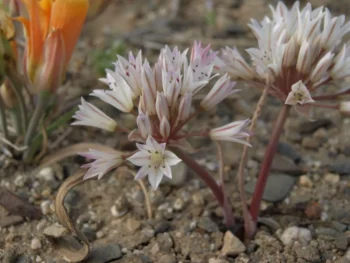
Darkred Onion: A Hidden Gem for Native Southwest Gardens
If you’re looking to add authentic southwestern character to your native plant garden, the darkred onion (Allium atrorubens var. cristatum) might just be the understated beauty you’ve been searching for. This perennial bulb brings the classic charm of wild onions to landscapes across the American Southwest, though you might need to do some detective work to track it down!
What Makes Darkred Onion Special?
The darkred onion is a true native of the American Southwest, naturally occurring across Arizona, California, Nevada, and Utah. As a member of the vast Allium family, it shares DNA with everything from your kitchen onions to those showy purple globes you see in fancy garden centers. But this variety has adapted specifically to the challenging conditions of the southwestern landscape.
This hardy perennial grows as what botanists call a forb – essentially a non-woody plant that comes back year after year from underground bulbs. Unlike its towering ornamental cousins, darkred onion tends to keep a more modest profile while still delivering the distinctive onion-family flowers that pollinators absolutely love.
- Species observed
- No observations
A Note About Rarity
Here’s something important to know: darkred onion carries a conservation status that suggests it may be less common in the wild than we’d like. If you’re determined to grow this native beauty, please make sure you source it from reputable native plant nurseries that use responsibly collected or propagated material. Never dig plants from the wild – it’s both environmentally harmful and often illegal.
Why Grow Darkred Onion in Your Garden?
There are several compelling reasons to consider this native bulb:
- Authentic regional character: This plant has been part of southwestern ecosystems for thousands of years
- Pollinator magnet: Like most alliums, it likely attracts bees, butterflies, and other beneficial insects
- Low maintenance: Once established, native bulbs typically require minimal care
- Drought tolerance: Adapted to arid conditions, perfect for water-wise gardening
- Seasonal interest: Provides blooms during its flowering period, then quietly retreats underground
Where Does Darkred Onion Fit in Your Landscape?
This native onion works beautifully in:
- Native plant gardens focused on southwestern species
- Rock gardens and xeric landscapes
- Naturalized areas where you want authentic regional flora
- Pollinator gardens that emphasize native plants
It’s probably not the best choice for formal flower beds or high-water landscapes, as it’s adapted to the feast or famine moisture patterns of its native habitat.
Growing Darkred Onion Successfully
While specific cultivation information for this variety is limited, we can make educated guesses based on its native habitat and related species:
Climate and Hardiness: Given its natural range across the Southwest, darkred onion likely thrives in USDA hardiness zones 5-9, though it’s most at home in the warmer end of that range.
Soil and Drainage: Like most desert-adapted bulbs, it almost certainly demands excellent drainage. Heavy, clay soils that stay wet will likely cause bulb rot. Sandy or rocky soils that drain quickly are ideal.
Sun and Water: Full sun exposure is probably essential, along with a watering schedule that mimics natural desert patterns – occasional deep watering followed by extended dry periods.
Planting Tips: If you can locate bulbs from a reputable source, plant them in fall at a depth roughly three times the bulb’s height. Space them according to the mature size you expect, keeping in mind that they may naturalize over time.
The Challenge of Finding Darkred Onion
Here’s the honest truth: this particular variety of native onion isn’t commonly available in the nursery trade. Your best bet for locating it is through:
- Specialized native plant nurseries in the Southwest
- Native plant society sales and exchanges
- Botanical gardens with plant propagation programs
If you can’t locate darkred onion specifically, consider other native Allium species from your region that might be more readily available while offering similar ecological benefits.
Is Darkred Onion Right for Your Garden?
This native bulb is perfect for gardeners who:
- Prioritize authentic regional native plants
- Enjoy the challenge of growing less common species
- Want to support native pollinators with indigenous food sources
- Appreciate subtle, naturalistic beauty over flashy displays
However, it might not be the best choice if you’re looking for readily available plants, bold garden statements, or species that thrive with regular irrigation.
The darkred onion represents the kind of plant that makes native gardening both rewarding and challenging – a true piece of American botanical heritage that connects your garden to the ancient landscapes of the Southwest. While it may take some effort to find and grow, the satisfaction of nurturing this authentic native species makes the journey worthwhile.