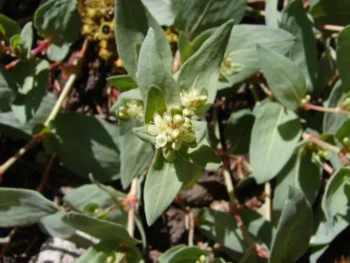
Davis’ Knotweed: A Hardy Native Perennial for Western Gardens
Looking for a low-maintenance native perennial that won’t demand constant attention? Meet Davis’ knotweed (Polygonum davisiae), a charming little herb that’s been quietly thriving in the western United States long before any of us picked up a garden trowel. This unassuming native might just be the perfect addition to your water-wise garden.
What Makes Davis’ Knotweed Special?
Davis’ knotweed is a native perennial herb that belongs to the buckwheat family. Standing at a modest 1.3 feet tall, this plant proves that good things come in small packages. During early summer, it produces small but conspicuous purple flowers that add a subtle splash of color to the landscape, followed by brown seeds that provide late-season interest.
As a true native of the American West, this species has naturally adapted to the region’s unique growing conditions, making it an excellent choice for gardeners who want to work with nature rather than against it.
Where Does It Grow Naturally?
Davis’ knotweed calls the Pacific Northwest and California home, naturally occurring in California, Idaho, Oregon, and Washington. This native distribution tells us a lot about where it will thrive in cultivation – primarily in western gardens with similar climate conditions.
- Species observed
- No observations
Why Choose Davis’ Knotweed for Your Garden?
There are several compelling reasons to consider this native perennial:
- Water-wise: With low moisture requirements and medium drought tolerance, it’s perfect for xeriscaping and water-conscious gardening
- Low maintenance: Once established, it requires minimal care and has low fertility needs
- Pollinator friendly: The purple blooms attract beneficial insects and native bees
- Native plant benefits: Supports local ecosystems and provides habitat for native wildlife
- Moderate growth rate: Won’t overwhelm your garden but fills in nicely over time
Perfect Garden Settings
Davis’ knotweed shines in several garden styles:
- Native plant gardens where it can mingle with other regional species
- Rock gardens where its moderate size and drought tolerance are assets
- Naturalized areas that benefit from low-maintenance ground cover
- Wildflower meadows where it adds texture and seasonal interest
- Water-wise landscapes that prioritize conservation
Growing Conditions and Care
The beauty of native plants lies in their adaptability, and Davis’ knotweed is no exception. Here’s what it needs to thrive:
Soil: Prefers well-draining, coarse to medium-textured soils. Avoid heavy clay soils as it’s not adapted to fine-textured growing media.
Sun exposure: Tolerates intermediate shade, making it versatile for various garden locations.
Water: Low water needs once established. During the first year, provide regular water to help establishment, then reduce to occasional deep watering.
pH: Adaptable to slightly acidic to neutral soils (pH 6.4-7.8).
Climate: Hardy to approximately USDA zones 5-9, tolerating temperatures as low as -23°F.
Planting and Propagation
Getting Davis’ knotweed established requires a bit of patience, but the results are worth it:
- From seed: With 125,000 seeds per pound, a little goes a long way. Seeds have medium vigor but slow spread rates
- From cuttings: Can be propagated vegetatively through cuttings
- Container plants: The most reliable method for home gardeners, though commercial availability is limited
- Spacing: Plan for 1,700-2,700 plants per acre, or roughly 18-24 inches apart in home gardens
Planting tip: This species requires at least 120 frost-free days and performs best with annual precipitation between 14-30 inches.
Seasonal Interest
Davis’ knotweed offers interest throughout its growing season:
- Spring and summer: Active growth period with fresh green foliage
- Early summer: Purple flowers provide color and attract pollinators
- Late summer: Brown seeds add texture and provide food for birds
- Winter: Dies back as a herbaceous perennial, returning each spring
Is Davis’ Knotweed Right for Your Garden?
This native perennial is ideal for gardeners who appreciate subtle beauty and want to support local ecosystems without high maintenance demands. It’s particularly well-suited for western gardens where water conservation is important and native plant communities are valued.
While it may not provide the flashy drama of some garden favorites, Davis’ knotweed offers something perhaps more valuable: a reliable, regionally appropriate plant that works harmoniously with its environment. For gardeners seeking to create sustainable, water-wise landscapes that benefit native wildlife, this humble knotweed deserves serious consideration.
Keep in mind that commercial availability is limited, so you may need to seek out specialty native plant nurseries or consider growing from seed. The investment in patience during establishment will reward you with years of low-maintenance beauty and the satisfaction of supporting your local ecosystem.