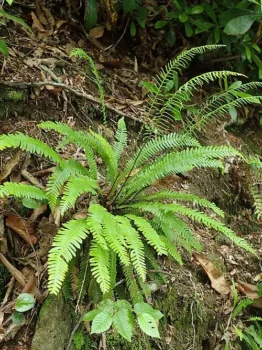
Deer Fern: A Pacific Northwest Native That’s Perfect for Shady Spots
If you’re looking to add some evergreen elegance to your shade garden, meet the deer fern (Blechnum spicant) – a Pacific Northwest native that’s been quietly beautifying forest floors for centuries. This charming fern might not have the flashiest name, but it’s got personality in spades and some pretty neat tricks up its fronds.
What Makes Deer Fern Special?
Deer fern is what botanists call a dimorphic fern, which is just a fancy way of saying it has two different types of fronds that look like they belong to different plants entirely. The sterile fronds (the ones that don’t produce spores) stay low and spread outward, creating a lovely evergreen carpet that reaches about 1-2 feet tall. Meanwhile, the fertile fronds shoot straight up like little green soldiers, reaching heights of up to 3.5 feet and bearing the plant’s spores.
This dual personality makes deer fern incredibly distinctive – once you know what to look for, you’ll spot it everywhere in Pacific Northwest forests.
Where You’ll Find This Pacific Beauty
Deer fern is a true Pacific Northwest native, calling home to a impressive range that stretches from Alaska down through British Columbia, Washington, Oregon, and into Northern California. You’ll also find it inland in Idaho, where it thrives in the cooler, moister mountain regions.
- Species observed
- No observations
Why Your Shade Garden Will Love Deer Fern
This perennial fern is like that reliable friend who’s always there when you need them. Here’s why deer fern deserves a spot in your garden:
- Year-round beauty: Those dark green fronds stay put through winter, providing structure and color when most other plants have called it quits
- Low maintenance: Once established, deer fern is remarkably self-sufficient
- Versatile placement: Works beautifully as groundcover, in woodland gardens, or as a textural accent in shaded borders
- Native plant benefits: Supports local ecosystems and is adapted to regional growing conditions
Perfect Garden Settings
Deer fern absolutely shines in woodland gardens and naturalistic shade plantings. It’s particularly at home in Pacific Northwest native plant gardens, where it can mingle with other regional favorites like Oregon grape, salal, and Western red cedar. The fern also works wonderfully in rain gardens, thanks to its facultative wetland status – meaning it’s happy in both moist and moderately dry conditions.
Consider using deer fern as a living mulch under taller shrubs, or plant it in drifts for a more dramatic effect. Its moderate growth rate means it won’t overwhelm smaller companions, but it will steadily fill in gaps over time.
Growing Conditions That Make Deer Fern Happy
Like most Pacific Northwest natives, deer fern has some specific preferences, but they’re not too demanding once you understand what it wants:
- Light: Partial to full shade (intermediate shade tolerance)
- Soil: Medium-textured, well-draining soil with high fertility requirements
- pH: Slightly acidic to neutral (5.5-7.0)
- Moisture: High moisture use – keep it consistently moist but not waterlogged
- Climate: Hardy in USDA zones 5-9, needs at least 160 frost-free days
- Precipitation: Thrives with 30-60 inches of annual rainfall
Planting and Care Tips
Getting deer fern established in your garden is pretty straightforward:
- Planting: Available primarily through specialty native plant nurseries (contracting only commercial availability)
- Spacing: Plant 1,200-1,700 per acre, or about 3-4 feet apart for garden settings
- Establishment: Water regularly during the first growing season to help roots establish
- Maintenance: Remove old, damaged fronds in late winter before new growth emerges
- Propagation: Can be propagated by container or sprigs; spreads naturally at a moderate rate through rhizomes
A Few Things to Keep in Mind
Deer fern isn’t the right choice for every garden situation. It has no drought tolerance whatsoever, so if you’re gardening in a dry climate or dealing with summer water restrictions, this might not be your fern. It also needs that higher fertility soil and consistent moisture to really thrive.
Additionally, while deer fern won’t attract pollinators (it’s a spore-producing fern, after all), it does provide habitat and cover for various woodland creatures – though specific wildlife benefits aren’t well-documented.
The Bottom Line
Deer fern is a fantastic choice for Pacific Northwest gardeners looking to create authentic woodland gardens or add year-round structure to shady areas. Its unique dimorphic fronds, evergreen nature, and native status make it a winner for environmentally conscious gardeners who want something a little different from the usual hosta-and-astilbe combination.
Just remember: this is a fern that likes its feet wet and its head in the shade. Give it those conditions, and you’ll have a reliable, attractive groundcover that connects your garden to the broader Pacific Northwest landscape.