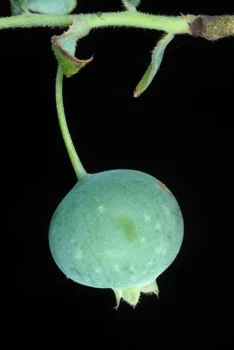
Deerberry: A Native Gem for Wildlife-Friendly Gardens
If you’re looking to add a low-maintenance native shrub that both wildlife and pollinators will thank you for, meet the deerberry (Vaccinium stamineum). This unassuming member of the blueberry family might not grab headlines like its more famous cousins, but it’s a quiet champion in the native gardening world.
What is Deerberry?
Deerberry is a perennial shrub that typically grows 6-16 feet tall, though it usually stays on the smaller side in garden settings. As a multi-stemmed woody plant, it creates a naturalistic, informal appearance that fits beautifully into woodland and native plant gardens. Don’t let the name fool you – while deer do enjoy the berries, this plant offers so much more than just deer food.
Native Status and Where It Grows
This truly American beauty is native to both Canada and the lower 48 states, with an impressive natural range spanning from Maine to Florida and west to Texas and Kansas. You’ll find wild deerberry growing in states including Alabama, Arkansas, Connecticut, Delaware, Florida, Georgia, Illinois, Indiana, Kansas, Kentucky, Louisiana, Maine, Maryland, Massachusetts, Mississippi, Missouri, New Jersey, New York, North Carolina, Ohio, Oklahoma, Pennsylvania, Rhode Island, South Carolina, Tennessee, Texas, Vermont, Virginia, and West Virginia – plus Ontario, Canada.
- Species observed
- No observations
Why Your Garden (and Local Wildlife) Will Love Deerberry
Here’s where deerberry really shines: it’s a wildlife magnet. According to research, this shrub provides 10-25% of the diet for small mammals and terrestrial birds, while larger animals get 5-10% of their nutrition from it. The berries ripen from summer through fall, providing an extended buffet for creatures great and small.
But the wildlife benefits don’t stop at the berries. The small, white, bell-shaped flowers that bloom in late spring to early summer are excellent pollinator plants, attracting native bees including bumblebees and various solitary bee species. The moderate growth rate means you won’t wait forever to see results, but you also won’t be constantly pruning an overly enthusiastic grower.
Perfect Garden Settings
Deerberry is wonderfully versatile in the landscape. It’s ideal for:
- Woodland and shade gardens
- Native plant landscapes
- Wildlife and pollinator gardens
- Naturalized areas and restoration projects
- Erosion control on slopes
- Understory plantings beneath taller trees
Growing Conditions and Care
One of deerberry’s best qualities is its easy-going nature. This shrub is highly drought tolerant once established and has low fertility requirements – perfect for gardeners who prefer a plant it and largely forget it approach.
Soil requirements:
- Acidic soil (pH 4.0-7.0)
- Well-draining, coarse to medium-textured soils
- Avoid heavy clay or fine-textured soils
Light and water:
- Shade tolerant – thrives in partial shade to full sun
- Low water needs once established
- Drought tolerant
Hardiness: Deerberry grows well in USDA zones 4-9, handling temperatures as low as -23°F.
Planting and Care Tips
Getting deerberry established is straightforward:
- Plant in spring after the last frost
- Choose a location with good drainage
- Add compost or other organic matter to improve soil structure
- Mulch around the base to retain moisture and suppress weeds
- Water regularly the first year, then reduce as the plant establishes
- Little to no fertilization needed – this plant prefers lean soils
Seeds require cold stratification if you’re growing from seed, but the plant can also be propagated from bare root or container plants. Unfortunately, commercial availability is currently limited, so you may need to seek out native plant nurseries or specialty suppliers.
A Few Things to Consider
While deerberry has many advantages, it’s worth noting that it’s classified as Facultative Upland across most regions, meaning it usually grows in non-wetland areas but can tolerate some moisture. It’s not suitable for consistently wet sites.
The plant is also not particularly fast-spreading – it has essentially no vegetative spread rate and slow seed spread. This is actually a plus for most gardeners who want a well-behaved shrub that won’t take over the garden.
The Bottom Line
Deerberry might not be the showiest plant in your garden, but it’s the kind of reliable, hardworking native that forms the backbone of a successful wildlife habitat. With its attractive white flowers, purple berries, moderate size, and exceptional wildlife value, it deserves a spot in any native garden. Plus, once established, it’s practically maintenance-free – leaving you more time to enjoy watching the parade of wildlife it attracts.
If you can track down a source, deerberry is definitely worth adding to your native plant wish list. Your local ecosystem will thank you for it.