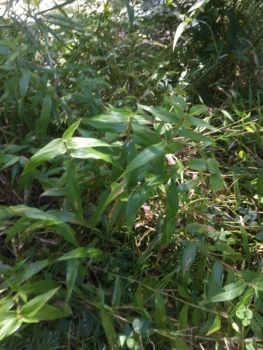
Deertongue: A Quietly Useful Native Grass for Your Garden
Meet deertongue (Dichanthelium clandestinum), a native grass that might not win any beauty contests but certainly deserves a spot in your naturalized garden. This unassuming perennial grass has been quietly doing its job across North American landscapes for centuries, and it’s ready to do the same in your yard.
What is Deertongue?
Deertongue, also known by its former scientific name Panicum clandestinum, is a clumping perennial grass native to both Canada and the lower 48 United States. Don’t let its modest appearance fool you – this grass is a workhorse that can handle challenging conditions while providing valuable ecosystem services.
This graminoid (that’s botanist-speak for grass-like plant) grows in a bunching pattern and reaches about 2 feet tall at maturity. Its green foliage has a medium texture that creates dense coverage in summer but becomes more open and porous in winter when the plant goes dormant.
Where Does Deertongue Grow Naturally?
Deertongue has one of the most impressive native ranges you’ll find in North American grasses. It naturally occurs across a vast territory including Alabama, Arkansas, Connecticut, Delaware, Florida, Georgia, Illinois, Indiana, Iowa, Kansas, Kentucky, Louisiana, Maine, Maryland, Massachusetts, Michigan, Mississippi, Missouri, New Hampshire, New Jersey, New York, North Carolina, Ohio, Oklahoma, Pennsylvania, Rhode Island, South Carolina, Tennessee, Texas, Vermont, Virginia, West Virginia, and the Canadian provinces of Nova Scotia, Ontario, and Quebec. Talk about a well-traveled plant!
- Species observed
- No observations
Why Consider Deertongue for Your Garden?
While deertongue won’t provide the showy blooms of wildflowers, it offers several compelling reasons to include it in your landscape:
- Incredible drought tolerance: Once established, this grass can handle dry conditions like a champ
- Soil flexibility: It adapts to coarse, medium, and fine-textured soils
- Low maintenance: Requires minimal fertility and has a long lifespan
- Fire tolerance: Can recover well after fire events
- Erosion control: The root system helps stabilize soil
- Wildlife habitat: Provides cover and nesting sites for small animals
Where Does Deertongue Fit in Your Landscape?
This grass is perfect for naturalized areas where you want a low-maintenance ground cover that won’t demand constant attention. Consider deertongue for:
- Native plant gardens
- Woodland edges and clearings
- Rain gardens and bioswales
- Restoration projects
- Areas with challenging growing conditions
Deertongue’s wetland status varies by region – it’s classified as Facultative Wetland in most areas, meaning it usually prefers moist conditions but can tolerate drier sites. This flexibility makes it valuable for transition zones between wet and dry areas in your landscape.
Growing Conditions and Care
One of deertongue’s best qualities is its easygoing nature. Here’s what this grass prefers:
- Sunlight: Full sun (it’s shade intolerant)
- Soil pH: Adaptable to acidic conditions (pH 4.0-7.5)
- Moisture: Low water needs once established
- Temperature: Hardy to approximately USDA zones 3-9 (can handle temperatures down to -33°F)
- Soil fertility: Thrives in low-fertility soils
Planting and Establishment Tips
Growing deertongue from seed requires a bit of patience, but it’s worth the wait:
- Seed preparation: Seeds require cold stratification before planting
- Planting time: Early spring after the last frost
- Germination: Expect slow, steady germination rather than quick results
- Establishment: This grass has low seedling vigor, so don’t panic if growth seems slow at first
- Spacing: Allow room for the mature clumping habit
The plant’s active growing period is spring and summer, with seed production occurring from summer through fall. With about 350,000 seeds per pound, a little goes a long way!
Setting Realistic Expectations
Deertongue is definitely a slow and steady wins the race kind of plant. It has a slow growth rate and takes time to establish, but once settled in, it can persist for many years. The flowers are inconspicuous, and the brown seeds won’t create dramatic seasonal interest, so this isn’t the grass for gardeners seeking immediate visual impact.
However, if you’re creating habitat, managing difficult sites, or building a sustainable landscape that works with nature rather than against it, deertongue could be exactly what you need. Sometimes the most valuable plants are the ones that quietly do their job without demanding the spotlight.
The Bottom Line
Deertongue may not be the most glamorous addition to your plant palette, but it’s an honest, hardworking native that can solve problems while supporting local ecosystems. If you have a naturalized area that needs reliable ground cover, challenging conditions that stump other plants, or simply want to support native biodiversity, give this humble grass a chance. Your local wildlife – and your maintenance schedule – will thank you.