Degelia Lichen: The Unsung Hero of Healthy Forest Ecosystems
If you’ve ever wandered through a misty forest and noticed gray-blue crusty patches adorning tree trunks and rocks, you might have encountered the fascinating world of degelia lichen (Degelia plumbea). While this isn’t a plant you can add to your shopping cart at the garden center, understanding this remarkable organism can tell you a lot about the health of your local ecosystem—and maybe even your own backyard!
What Exactly Is Degelia Lichen?
Let’s clear up a common misconception right away: lichens aren’t plants at all! Degelia plumbea is actually a symbiotic partnership between a fungus and algae (and sometimes bacteria too). Think of it as nature’s ultimate roommate situation—the fungus provides structure and protection, while the algae whip up food through photosynthesis. It’s a win-win arrangement that’s been working for millions of years.
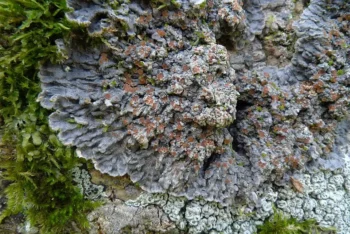
This particular lichen goes by the scientific name Degelia plumbea, though you might also see it listed under its older synonym, Parmeliella plumbea. The name plumbea refers to its distinctive lead-gray to bluish color, which makes it look almost metallic against tree bark.
Where to Find This Native North American Species
Degelia plumbea is a true North American native, thriving in the cool, humid regions across the continent. You’re most likely to spot it in northern forests and mountainous areas where the air is clean and moisture levels stay consistently high. It has a particular fondness for old-growth forests, where it can settle in for the long haul on stable tree bark and rock surfaces.
How to Identify Degelia Lichen
Spotting degelia lichen is like finding nature’s own abstract art installation. Here’s what to look for:
- Gray-blue to lead-colored crusty or scaly appearance
- Forms patches or rosettes on tree bark, particularly on older trees
- May also grow on rocks in shaded, humid locations
- Texture appears somewhat metallic or powdery
- Typically found in areas with minimal air pollution
Is Degelia Lichen Beneficial for Your Garden?
While you can’t exactly plant degelia lichen in your garden bed, its presence (or absence) can tell you important things about your outdoor space. Lichens are incredibly sensitive to air quality—they’re like nature’s canaries in the coal mine. If you spot degelia lichen growing naturally in your area, congratulations! It’s a sign that your local air quality is pretty darn good.
Here’s why having lichens around is actually fantastic for your garden ecosystem:
- They indicate excellent air quality
- They contribute to soil formation as they slowly break down rock surfaces
- They provide microhabitats for tiny creatures
- They add visual interest to mature trees and rock features
- They’re completely harmless to trees and won’t damage bark
Creating Lichen-Friendly Conditions
You can’t plant degelia lichen, but you can certainly create conditions that might encourage it (and other beneficial lichens) to show up naturally:
- Maintain mature trees with textured bark
- Avoid using pesticides and herbicides that could harm these sensitive organisms
- Keep areas around trees and rocks undisturbed
- Consider adding natural stone features to your landscape
- Be patient—lichens grow incredibly slowly!
A Living Indicator of Ecosystem Health
Think of degelia lichen as a compliment from nature itself. Its presence means your local environment is clean, stable, and healthy enough to support these finicky organisms. While you might not be able to cultivate it like your favorite perennials, you can certainly appreciate it as a sign that you’re doing something right in creating a healthy outdoor space.
Next time you’re on a nature walk or exploring the wooded areas near your home, keep an eye out for those distinctive gray-blue patches. They’re not just pretty—they’re proof positive that clean air and healthy ecosystems are alive and well in your neck of the woods!