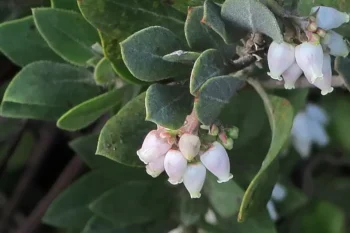
Del Norte Manzanita: A Rare California Native Worth Growing
If you’re looking to add a touch of California’s wild beauty to your garden, Del Norte manzanita (Arctostaphylos nortensis) might just be the perfect shrub for you. This perennial evergreen brings authentic West Coast charm to any landscape, though finding it might require a bit of detective work.
What Makes Del Norte Manzanita Special?
Del Norte manzanita is a true California native, found exclusively in the Golden State. As its common name suggests, this shrub has strong ties to the Del Norte region of Northern California, where it grows naturally in coastal environments. Like other members of the manzanita family, it’s a multi-stemmed woody shrub that typically stays under 13-16 feet tall, making it a manageable size for most home landscapes.
This species is also known by its scientific synonym, Arctostaphylos columbiana Piper ssp. nortensis, which you might encounter when researching or sourcing plants.
Where Does It Grow?
Del Norte manzanita calls California home, specifically thriving in the state’s coastal regions. Its distribution is quite limited compared to some of its manzanita cousins, which makes it all the more special for native plant enthusiasts.
- Species observed
- No observations
A Note About Rarity
Here’s something important to know: Del Norte manzanita has a somewhat uncertain conservation status. While it’s not critically endangered, its limited distribution means you should be thoughtful about where you source your plants. Always purchase from reputable native plant nurseries that propagate their stock responsibly rather than collecting from wild populations.
Why Grow Del Norte Manzanita?
There are several compelling reasons to consider this native shrub:
- Authentic California character: Nothing says Golden State garden quite like a manzanita
- Low maintenance: Once established, manzanitas are famously drought-tolerant and require minimal care
- Year-round interest: Evergreen foliage provides consistent structure in your landscape
- Pollinator support: Manzanitas typically produce clusters of small, urn-shaped flowers that attract bees and other beneficial insects
- Wildlife habitat: Native shrubs provide food and shelter for local wildlife
Perfect Garden Settings
Del Norte manzanita works beautifully in:
- Native plant gardens
- Mediterranean-style landscapes
- Drought-tolerant garden designs
- Naturalized areas
- Coastal gardens (especially if you live in Northern California)
Growing Conditions and Care
While specific growing information for Del Norte manzanita is limited, we can draw from the general needs of the manzanita family:
- Climate: Likely thrives in USDA zones 8-10, matching California’s coastal climate
- Soil: Well-draining soil is essential – manzanitas hate wet feet
- Water: Drought-tolerant once established, but may need occasional summer water in hotter inland areas
- Sun: Probably prefers full sun to partial shade
- Maintenance: Minimal pruning needed; light shaping after flowering if desired
Planting Tips for Success
To give your Del Norte manzanita the best start:
- Plant in fall or early spring when temperatures are mild
- Improve drainage if your soil tends to stay soggy
- Water regularly the first year to help establish roots
- Mulch around the base, but keep mulch away from the trunk
- Be patient – manzanitas can be slow to establish but are worth the wait
The Bottom Line
Del Norte manzanita offers gardeners a chance to grow a truly special piece of California’s natural heritage. While it may require some extra effort to source and isn’t the easiest plant to find information about, its rarity makes it all the more rewarding to grow. Just remember to purchase from responsible sources to help protect wild populations of this unique native shrub.
If you’re passionate about native plants and want to add something genuinely special to your California garden, Del Norte manzanita could be exactly what you’re looking for. Your local pollinators – and the environment – will thank you for choosing native.