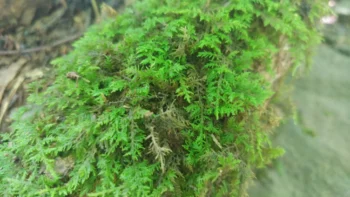
Delicate Thuidium Moss: A Feathery Native Groundcover Worth Knowing
If you’ve ever wandered through a shaded woodland and noticed intricate, feathery green carpets covering the forest floor, you might have encountered delicate thuidium moss (Thuidium delicatulum). This charming native moss brings a touch of woodland magic to any garden, though it’s quite particular about where it likes to call home.
What Exactly Is Delicate Thuidium Moss?
Delicate thuidium moss is a terrestrial moss species native to North America. Unlike the flowering plants we typically think of when planning our gardens, this little green wonder belongs to an ancient group of plants that reproduce through spores rather than seeds. It’s what botanists call a bryophyte – essentially a very old-school plant that’s been perfecting its craft for millions of years.
This moss forms delicate, intricate mats with a distinctly feathery appearance. Its branching pattern resembles tiny fern fronds, creating beautiful texture and visual interest in shaded garden spaces. The bright to dark green coloration can shift with moisture levels and seasonal changes, adding subtle variety to your landscape.
Where Does It Call Home?
Delicate thuidium moss is a true North American native, with populations documented across the eastern regions of the continent. In the United States, it can be found in states like New York, though its range likely extends into other northeastern and southeastern states. The moss also appears in parts of southeastern Canada, making it a genuinely regional species.
- Species observed
- No observations
Is It Beneficial for Your Garden?
Absolutely! While delicate thuidium moss might not attract butterflies like your favorite native wildflowers, it offers several unique benefits:
- Natural groundcover: Creates living carpets in areas where traditional grass struggles
- Habitat provider: Supports tiny invertebrates and microorganisms that form the base of woodland food webs
- Erosion control: Helps stabilize soil in shaded, sloped areas
- Low maintenance: Once established, requires virtually no care
- Authentic woodland character: Brings genuine native forest vibes to shade gardens
How to Identify Delicate Thuidium Moss
Spotting delicate thuidium moss in the wild (or confirming its presence in your garden) is easier when you know what to look for:
- Growth pattern: Forms low, spreading mats that hug the ground or attach to rocks and logs
- Texture: Distinctly feathery with intricate, delicate branching patterns
- Color: Ranges from bright green when moist to darker green or brownish when dry
- Habitat: Thrives in consistently moist, shaded locations with good air circulation
- Surface preference: Often grows on soil, decaying wood, or rock surfaces rather than exclusively on living trees
Creating the Right Environment
If you’re hoping to encourage delicate thuidium moss in your garden, focus on creating optimal conditions rather than trying to plant it directly. This moss thrives in:
- Consistently moist (but not waterlogged) conditions
- Shaded to partially shaded locations
- Areas with good air circulation
- Acidic to neutral soil conditions
- Spots protected from foot traffic and disturbance
Perfect Garden Companions
Delicate thuidium moss pairs beautifully with other shade-loving natives. Consider combining it with native ferns, wild ginger, or woodland wildflowers for a truly authentic forest floor experience. It’s particularly stunning in rock gardens where it can cascade over stone edges or fill gaps between larger plants.
The Bottom Line
While you can’t exactly plant delicate thuidium moss like you would a perennial, creating the right conditions in your shade garden might just invite this delicate beauty to take up residence naturally. It’s a wonderful example of how native plants – even the tiniest ones – contribute to healthy, sustainable landscapes that support local ecosystems. Plus, there’s something undeniably magical about having your own patch of authentic woodland right in your backyard!