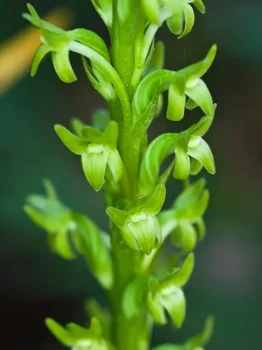
Denseflower Rein Orchid: A Stunning Native That’s Best Admired in the Wild
If you’ve ever stumbled upon a tall spike of delicate white flowers rising from the forest floor during a woodland hike, you might have encountered the enchanting denseflower rein orchid (Piperia elongata). This native beauty is one of those plants that makes you stop in your tracks—and then makes you wonder if you could possibly grow it in your own garden.
What Makes This Orchid Special
The denseflower rein orchid is a true Pacific Northwest native, calling home to the cool, moist forests from British Columbia down through California and eastward into Montana and Idaho. Unlike the flashy tropical orchids you might see at the garden center, this perennial forb has a more subtle elegance that perfectly suits its woodland habitat.
During summer months, typically from June through August, the plant sends up impressive flower spikes that can reach anywhere from 1 to 4 feet tall. These spikes are densely packed with small, fragrant white to greenish-white flowers that release their sweet perfume into the evening air to attract moths and other nocturnal pollinators.
- Species observed
- No observations
The Reality of Growing Denseflower Rein Orchids
Here’s where we need to have an honest conversation: while this orchid is absolutely stunning and completely native to western North America (thriving in USDA zones 4-8), it’s not really a plant for the home garden. And that’s okay! Here’s why:
- Mycorrhizal dependency: Like most native orchids, denseflower rein orchids have complex relationships with specific soil fungi that are nearly impossible to replicate in cultivation
- Specific habitat needs: They require the exact combination of partial to full shade, consistently moist but well-draining soil, and cool woodland conditions
- Lengthy establishment: Even if you could provide perfect conditions, these orchids can take many years to establish and bloom
- Conservation concerns: Wild collection of orchids is generally discouraged to protect native populations
How to Appreciate This Native Beauty
Instead of trying to grow denseflower rein orchids in your garden, here are better ways to enjoy and support these remarkable plants:
- Seek them out in nature: Visit Pacific Northwest forests during summer months to spot them in their natural habitat
- Protect existing populations: If you find them on your property, preserve their woodland habitat
- Choose garden-friendly alternatives: Plant other native woodland flowers that provide similar aesthetic appeal but are more cultivation-friendly
- Support conservation efforts: Consider donating to organizations that protect native orchid habitats
Creating Orchid-Friendly Habitat
While you shouldn’t try to transplant or cultivate denseflower rein orchids directly, you can create the kind of woodland conditions they love, which might encourage them to appear naturally if you live within their native range. Focus on:
- Maintaining undisturbed woodland areas with native trees and shrubs
- Avoiding pesticides and herbicides that could harm soil fungi
- Preserving natural leaf litter and organic matter
- Minimizing soil compaction in wooded areas
The Bottom Line
The denseflower rein orchid is a spectacular native plant that plays an important role in Pacific Northwest ecosystems, providing nectar for moths and adding ethereal beauty to forest understories. While it’s not suitable for home cultivation, appreciating it in the wild and protecting its natural habitat is the best way to ensure future generations can also marvel at these woodland gems.
Sometimes the most beautiful plants are the ones we admire from a respectful distance, knowing that their wild nature is exactly what makes them so special.