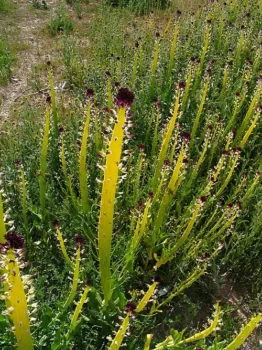
Desert Candle: A Quirky Native Annual for California Gardens
Meet the desert candle (Caulanthus inflatus), one of California’s more unusual native wildflowers that’s sure to spark conversation in your garden. This quirky annual brings a touch of desert magic to landscapes with its distinctive inflated seed pods and delicate flowers, making it a fascinating choice for gardeners looking to embrace California’s native plant heritage.
What Makes Desert Candle Special
Desert candle belongs to the mustard family and grows as an annual forb—basically a non-woody plant that completes its entire life cycle in one growing season. What sets this plant apart are its remarkable inflated, bladder-like seed pods that give the plant its common name and create an almost otherworldly appearance in the garden.
You might also encounter this plant listed under its scientific synonym Streptanthus inflatus in older gardening references, but Caulanthus inflatus is the accepted current name.
Where Desert Candle Calls Home
This California native has a somewhat limited natural range, growing primarily in the state’s desert regions including parts of the Mojave Desert and Southern California. As a plant adapted to California’s unique desert ecosystems, it represents an important piece of the state’s botanical heritage.
- Species observed
- No observations
A Note About Rarity
Before we dive into growing tips, it’s important to note that desert candle has an undefined conservation status, which suggests it may face some population pressures in the wild. If you’re interested in growing this plant, please source seeds or plants only from reputable native plant nurseries that practice responsible collection methods. Never collect from wild populations.
Garden Appeal and Design Role
Desert candle brings several unique qualities to the garden:
- Architectural interest with its tall stems and unusual inflated pods
- Delicate small white to pale yellow flowers that attract pollinators
- Vertical structure that adds height variation to plantings
- Conversation starter due to its distinctive appearance
In landscape design, desert candle works beautifully as a specimen plant or accent in desert gardens, xeriscapes, and rock gardens. It’s particularly effective when planted in groups to create a naturalistic wildflower display that mimics its native habitat.
Growing Conditions and Care
Desert candle is perfectly adapted to California’s arid environments and thrives in conditions that might challenge other plants:
- Sunlight: Full sun exposure
- Soil: Well-draining sandy or rocky soils
- Water: Low water requirements once established
- Climate: USDA hardiness zones 8-10
The key to success with desert candle is mimicking its natural growing conditions. Good drainage is absolutely essential—this plant cannot tolerate soggy soils and will quickly succumb to root rot in overly moist conditions.
Planting and Care Tips
Growing desert candle successfully requires understanding its annual nature and desert origins:
- Direct sow seeds in fall for spring germination and bloom
- Plant in areas with excellent drainage
- Provide minimal supplemental water once established
- Allow plants to self-seed for naturalized colonies
- Avoid over-fertilizing, which can promote excessive foliage at the expense of flowers
Wildlife and Pollinator Benefits
While desert candle may seem modest in size, it provides valuable resources for California’s native wildlife. The small flowers attract various pollinators including native bees and other beneficial insects, contributing to the local ecosystem’s health.
Is Desert Candle Right for Your Garden?
Desert candle is an excellent choice for gardeners who:
- Want to support California native plants
- Are creating water-wise landscapes
- Enjoy unique and unusual plants
- Live in areas with hot, dry summers
- Have well-draining soil conditions
However, this plant may not be suitable if you have heavy clay soils, prefer lush green landscapes, or live in areas with high humidity and frequent rainfall.
Growing Responsibly
Given desert candle’s uncertain conservation status, responsible gardening practices are essential. Always purchase from reputable sources, never collect from wild populations, and consider this plant as part of a broader commitment to supporting California’s native plant communities. By growing desert candle in your garden, you’re helping to preserve genetic diversity and ensuring this unique species continues to thrive for future generations to enjoy.
Desert candle proves that native plants can be both ecologically valuable and garden-worthy. With its distinctive appearance and low-maintenance nature, it’s a wonderful addition to any California garden focused on sustainability and regional character.