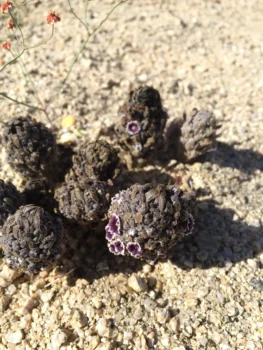
Desert Christmas Tree: A Rare and Mysterious Desert Native
If you’ve ever wandered through the Sonoran Desert and spotted what looks like a tiny white Christmas tree poking up through the sand, you’ve likely encountered one of North America’s most unusual native plants. The desert Christmas tree (Pholisma arenarium) is a fascinating parasitic perennial that’s as mysterious as it is rare.
What Makes Desert Christmas Tree Special
This quirky desert native belongs to a small family of parasitic plants and lives a completely underground lifestyle for most of its life. What you see above ground – those distinctive white to pinkish flower spikes that give the plant its Christmas tree nickname – represents just the tip of the iceberg. The rest of the plant exists as a network of roots that tap into the root systems of desert shrubs, particularly burrobush (Ambrosia dumosa), to steal nutrients and water.
Where You’ll Find Desert Christmas Tree
Desert Christmas tree is native to the southwestern United States, specifically found in Arizona and California’s desert regions. It’s perfectly adapted to the harsh conditions of the Sonoran Desert, where it thrives in sandy washes and flats.
- Species observed
- No observations
A Plant to Admire, Not Cultivate
Here’s where we need to have a frank conversation: desert Christmas tree is classified as vulnerable (S3 conservation status), with only 21 to 100 known occurrences and an estimated 3,000 to 10,000 individual plants remaining in the wild. This rarity, combined with its extremely specialized lifestyle, means it’s not a plant for home gardens.
Why you shouldn’t try to grow desert Christmas tree:
- It’s a rare species that needs protection in its natural habitat
- It requires specific host plants to survive (you can’t just plant it anywhere)
- Its parasitic nature makes cultivation nearly impossible
- Harvesting from wild populations would further threaten this vulnerable species
Appreciating Desert Christmas Tree in the Wild
The best way to enjoy this remarkable plant is to seek it out during desert hiking trips in Arizona and California. The flowering spikes typically appear after winter rains, creating an otherworldly scene in the desert landscape. These unusual blooms attract various desert pollinators, including native bees and flies, making them important contributors to desert ecosystems despite their small numbers.
Desert Garden Alternatives
If you’re drawn to unusual desert plants for your xeriscaping or native garden, consider these fascinating alternatives that are more garden-friendly:
- Ghost plant (Graptopetalum paraguayense) for unique form
- Desert marigold (Baileya multiradiata) for bright desert color
- Brittlebush (Encelia farinosa) for reliable desert blooms
- Desert willow (Chilopsis linearis) for unusual flowers
Supporting Desert Christmas Tree Conservation
While you can’t grow desert Christmas tree at home, you can support its conservation by:
- Visiting and supporting desert botanical gardens that protect native habitats
- Following Leave No Trace principles when hiking in desert areas
- Supporting organizations working to protect Sonoran Desert ecosystems
- Spreading awareness about rare desert plants and their importance
Desert Christmas tree reminds us that not every fascinating native plant belongs in our gardens – sometimes the best way to appreciate nature’s wonders is to protect them where they naturally occur. Next time you’re exploring the Sonoran Desert, keep an eye out for these remarkable little Christmas trees and take a moment to appreciate one of the desert’s most specialized and vulnerable residents.