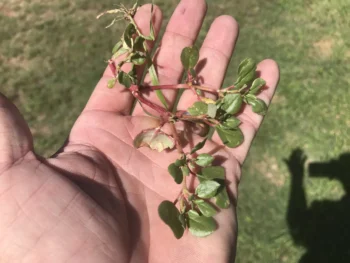
Desert Horsepurslane: A Hardy Ground Cover for Challenging Conditions
Looking for a tough, low-maintenance ground cover that can handle the harshest conditions your garden can throw at it? Meet desert horsepurslane (Trianthema portulacastrum), a resilient little plant that thrives where others fear to tread. This unassuming forb might not win any beauty contests, but it’s got character and staying power that make it worth considering for specific garden situations.
What Exactly Is Desert Horsepurslane?
Desert horsepurslane is a low-growing forb – essentially an herbaceous plant without woody stems – that can behave as either an annual or perennial depending on your climate. Think of it as nature’s carpet for tough spots: it spreads close to the ground with succulent-like, fleshy oval leaves and produces tiny pink to purplish flowers that, while small, add subtle color to the landscape.
As a forb, this plant lacks significant woody tissue and keeps its growing points at or below ground level, making it well-adapted to survive in challenging environments where other plants might struggle.
Where Does It Call Home?
Here’s where things get interesting with desert horsepurslane’s native status. This adaptable plant is native to the lower 48 states, Puerto Rico, and the U.S. Virgin Islands, but it’s considered introduced (though naturalized) in Hawaii. You’ll find it growing across a impressive range of states including Alabama, Arizona, Arkansas, California, Colorado, Florida, Louisiana, Maryland, Mississippi, Missouri, Nevada, New Jersey, New Mexico, Oklahoma, South Carolina, Tennessee, Texas, Utah, and Virginia.
- Species observed
- No observations
This wide distribution speaks to the plant’s remarkable adaptability – it’s clearly found a way to make itself at home in diverse climates and conditions.
Should You Plant Desert Horsepurslane?
The answer depends on what you’re trying to achieve in your garden. Desert horsepurslane isn’t going to be the star of your flower border, but it excels in specific situations:
- Drought-prone areas: Once established, this plant laughs in the face of dry conditions
- Poor soils: Sandy, rocky, or otherwise challenging soil? No problem
- Coastal gardens: Its salt tolerance makes it suitable for seaside locations
- Naturalized areas: Perfect for low-maintenance, naturalistic plantings
- Erosion control: Its ground-hugging habit helps stabilize soil
However, be aware that in Hawaii, where it’s not native, you might want to consider native alternatives that provide similar benefits without the ecological concerns of introduced species.
Growing Conditions and Care
Desert horsepurslane is refreshingly low-maintenance. Here’s what it needs to thrive:
Sunlight: Full sun is best – this plant loves basking in bright light
Soil: Well-draining soil is crucial. Sandy, rocky, or even poor soils work perfectly. The key is avoiding waterlogged conditions
Water: Minimal once established. This is truly a plant it and forget it species when it comes to watering
Climate: Hardy in USDA zones 8-11, though it may behave as an annual in cooler areas
Wetland Tolerance
Interestingly, despite its drought tolerance, desert horsepurslane shows remarkable flexibility when it comes to moisture. Its wetland status varies by region – from facultative (can grow in wet or dry conditions) in most areas to facultative wetland (usually prefers wet conditions) in some regions like the Atlantic and Gulf Coastal Plain and Great Plains. This adaptability makes it useful for areas with variable moisture conditions.
Planting and Care Tips
Getting desert horsepurslane established is straightforward:
- Planting: Direct seed in spring after the last frost, or start from transplants
- Spacing: Allow room for spreading – this plant likes to sprawl
- Watering: Water lightly until established, then reduce to minimal supplemental watering
- Maintenance: Very little needed – this is a low-maintenance plant
- Self-seeding: Be prepared for it to self-seed readily in favorable conditions
Wildlife and Pollinator Benefits
While desert horsepurslane may not be a pollinator magnet, its small flowers do attract smaller pollinators including native bees and flies. Every little bit helps when it comes to supporting local pollinator populations, and ground-covering plants like this can provide important habitat and landing spots for beneficial insects.
The Bottom Line
Desert horsepurslane isn’t flashy, but it’s incredibly useful for challenging garden situations where you need reliable ground cover. If you’re dealing with drought, poor soil, salt exposure, or just want a low-maintenance plant for naturalized areas, this tough little forb might be exactly what you need. Just remember to consider native alternatives if you’re gardening in Hawaii, where this species isn’t indigenous.
Sometimes the most valuable plants in our gardens aren’t the showstoppers – they’re the reliable workhorses that quietly get the job done, year after year.