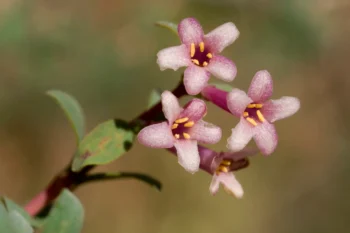
Desert Snowberry: A Hardy Native Shrub for Water-Wise Gardens
If you’re looking for a tough-as-nails native shrub that laughs in the face of drought while providing year-round interest, let me introduce you to desert snowberry (Symphoricarpos longiflorus). This unassuming but resilient perennial shrub might just become your new favorite low-maintenance garden companion.
What is Desert Snowberry?
Desert snowberry is a multi-stemmed woody shrub that typically grows 4-5 feet tall, though it can occasionally reach up to 13-16 feet under ideal conditions. As a true native of the American West, this hardy perennial has adapted perfectly to challenging growing conditions that would make other plants throw in the towel.
Where Does It Grow Naturally?
This remarkable shrub calls the western United States home, thriving across nine states: Arizona, California, Colorado, Idaho, Nevada, New Mexico, Oregon, Texas, and Utah. It’s particularly well-suited to arid and semi-arid regions where many other plants struggle to survive.
- Species observed
- No observations
Why Plant Desert Snowberry in Your Garden?
Desert snowberry offers several compelling reasons to earn a spot in your landscape:
- Drought tolerance: Once established, this shrub requires minimal supplemental watering
- Four-season interest: Delicate pink or white tubular flowers in summer give way to clusters of bright white berries that persist through winter
- Wildlife magnet: Flowers attract native bees, butterflies, and hummingbirds, while birds feast on the berries
- Low maintenance: Thrives in poor soils and requires little care once established
- Erosion control: Excellent for stabilizing slopes and preventing soil erosion
Best Garden Settings for Desert Snowberry
This versatile shrub shines in several garden types:
- Xeriscaped and drought-tolerant gardens
- Native plant gardens and naturalistic landscapes
- Wildlife gardens focused on supporting pollinators and birds
- Slope stabilization projects
- Low-water commercial landscapes
Growing Conditions and Care
Desert snowberry is refreshingly easy to grow when you match its preferences:
Sunlight: Performs best in full sun but tolerates partial shade
Soil: Adaptable to various soil types, including poor soils, as long as drainage is good
Water: Drought tolerant once established; avoid overwatering
Hardiness: Thrives in USDA zones 4-9, handling both cold winters and hot summers
Planting and Care Tips
Getting desert snowberry established in your garden is straightforward:
- Best planting time: Fall or early spring when temperatures are moderate
- Spacing: Allow 4-6 feet between plants for proper air circulation
- Initial watering: Water regularly the first year to establish roots, then reduce frequency
- Pruning: Light pruning in late winter if needed to maintain shape
- Fertilizing: Generally unnecessary; this shrub thrives in lean soils
The Bottom Line
Desert snowberry proves that native plants can be both beautiful and practical. Its combination of drought tolerance, wildlife value, and year-round interest makes it an excellent choice for gardeners seeking sustainable, low-maintenance landscaping solutions. Whether you’re creating a water-wise garden or simply want to support local wildlife, this hardy native shrub delivers on all fronts without demanding much in return.
Ready to add some desert toughness to your landscape? Desert snowberry might be exactly what your garden has been waiting for.