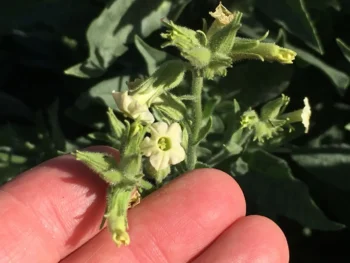
Desert Tobacco: A Hardy Native for Water-Wise Gardens
If you’re looking for a tough-as-nails native plant that can handle scorching summers and still provide subtle beauty to your landscape, meet desert tobacco (Nicotiana obtusifolia). This unassuming wildflower might not win any beauty contests, but it’s got the kind of resilience that makes desert gardeners swoon.
What Makes Desert Tobacco Special?
Desert tobacco is a true native plant of the American Southwest, naturally occurring across Arizona, California, Nevada, New Mexico, Texas, Utah, Oklahoma, and even Maryland. As a member of the nightshade family, it’s adapted to thrive in some of the harshest conditions North America has to offer.
- Species observed
- No observations
This hardy forb (that’s garden-speak for a non-woody flowering plant) can live as an annual, biennial, or perennial depending on growing conditions. In mild climates, it might stick around for several years, while in harsher areas it completes its life cycle in one or two seasons.
Garden Appeal and Design Role
Don’t expect showy blooms from desert tobacco – its charm lies in understated elegance. The plant produces small, white tubular flowers that may seem modest, but they’re perfectly designed for their purpose. The gray-green foliage provides a nice backdrop for more colorful desert natives, making it an excellent supporting player in naturalized landscapes.
Desert tobacco works beautifully in:
- Xeriscaped gardens where water conservation is key
- Native plant gardens celebrating regional flora
- Naturalized areas that mimic wild desert landscapes
- Wildlife gardens designed to support local ecosystems
Wildlife and Pollinator Benefits
While desert tobacco might look unremarkable to us, it’s a magnet for nighttime pollinators. Those small white flowers are perfectly shaped for moths, which are drawn to their subtle fragrance after dark. Hummingbirds also appreciate the tubular blooms, and various native bees visit during daylight hours.
Growing Conditions and Care
Here’s where desert tobacco really shines – it’s practically maintenance-free once established. This plant thrives in USDA hardiness zones 8-11 and prefers:
- Full sun: At least 6-8 hours of direct sunlight daily
- Well-draining soil: Sandy or rocky soils are perfect; avoid clay that holds moisture
- Low water: Drought-tolerant once established, requiring minimal supplemental irrigation
- Poor to moderate fertility: Rich soils can actually make the plant too lush and less drought-tolerant
Desert tobacco has a Facultative Upland wetland status across all regions, meaning it usually grows in non-wetland areas but can occasionally tolerate some moisture. However, it performs best in dry conditions.
Planting and Care Tips
Getting desert tobacco established is refreshingly simple:
- Seeding: Direct seed in fall or early spring when temperatures are moderate
- Spacing: Allow plenty of room as plants can self-seed and naturalize
- Watering: Water lightly during germination, then reduce frequency as plants establish
- Maintenance: Virtually none required – this plant thrives on neglect
- Self-seeding: Expect volunteer seedlings if conditions are right
Should You Plant Desert Tobacco?
Desert tobacco is an excellent choice for gardeners who:
- Want to support native ecosystems
- Need drought-tolerant plants for water-wise landscaping
- Appreciate subtle, naturalized garden aesthetics
- Desire low-maintenance plants that virtually care for themselves
- Want to attract nighttime pollinators and wildlife
While it might not be the showstopper of your garden, desert tobacco earns its place through reliability, ecological value, and that satisfying feeling of growing something that truly belongs in your landscape. In a world where many gardeners are moving toward more sustainable practices, this humble native proves that sometimes the best plants are the ones that ask for the least while giving back the most.