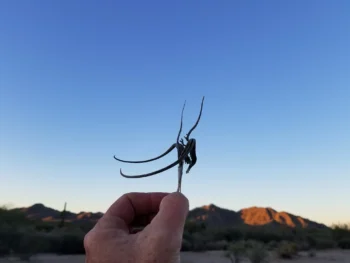
Desert Unicorn-Plant: The Quirky Native with Magical Seed Pods
Meet one of the Southwest’s most entertaining native plants: the desert unicorn-plant (Proboscidea althaeifolia). This delightfully odd perennial forb might not win any beauty contests with its sprawling habit, but it more than makes up for it with personality and some of the most unusual seed pods you’ll ever see in a garden.
What Makes Desert Unicorn-Plant Special?
The desert unicorn-plant earns its whimsical name from its distinctive curved seed pods that look remarkably like miniature unicorn horns. These woody, hooked pods are the plant’s claim to fame and make fantastic conversation starters in any garden. Beyond the novelty factor, this native Southwest species offers large, heart-shaped leaves and tubular flowers that provide nectar for local pollinators.
You might also see this plant listed under its former scientific names, including Martynia althaeifolia or Proboscidea arenaria, but don’t let the botanical shuffle confuse you – it’s the same fascinating plant.
Where Does It Grow Naturally?
As a true native of the American Southwest, desert unicorn-plant naturally occurs across Arizona, California, New Mexico, and Texas. It’s perfectly adapted to the hot, dry conditions of these regions and has been thriving in desert landscapes long before gardeners discovered its quirky charm.
- Species observed
- No observations
Why Grow Desert Unicorn-Plant?
Here are the top reasons gardeners fall in love with this unusual native:
- Unique conversation starter: Those curved seed pods are guaranteed to spark questions from visitors
- True native plant: Supporting local ecosystems while reducing water needs
- Drought tolerance: Perfect for xerophytic and water-wise gardens
- Pollinator friendly: Tubular flowers attract bees and other beneficial insects
- Low maintenance: Once established, it practically takes care of itself
Growing Conditions and Care
Desert unicorn-plant thrives in USDA hardiness zones 8-11, making it suitable for most of the Southwest and other warm, dry regions. Here’s what it needs to flourish:
Sunlight: Full sun is essential – this desert native loves basking in direct sunlight all day long.
Soil: Well-draining sandy or rocky soil works best. Heavy clay or waterlogged conditions will quickly kill this drought-adapted plant.
Water: Once established, desert unicorn-plant needs minimal supplemental watering. During its first growing season, provide occasional deep watering, then let nature take over.
Planting and Propagation Tips
The easiest way to grow desert unicorn-plant is from seed planted directly in the garden:
- Plant seeds in spring after the last frost
- Barely cover seeds with soil – they need some light to germinate
- Keep soil lightly moist until germination occurs
- Space plants 2-3 feet apart to allow for their sprawling growth habit
- Be patient – germination can be spotty and take several weeks
Design Ideas and Garden Placement
Desert unicorn-plant works wonderfully in:
- Native plant gardens showcasing regional flora
- Xerophytic landscapes and desert-themed gardens
- Children’s gardens where the unique pods create wonder and excitement
- Naturalized areas where its sprawling habit can spread freely
- Rock gardens with other drought-tolerant natives
Keep in mind that this is a spreading forb that can grow quite wide, so give it plenty of room or be prepared to manage its enthusiastic growth.
Harvesting Those Famous Pods
The seed pods are ready to harvest when they turn brown and woody, usually in late summer or fall. These make excellent additions to dried flower arrangements and craft projects. Just be careful of the sharp hooks when handling them!
The Bottom Line
Desert unicorn-plant isn’t for every garden or every gardener. It’s sprawling, somewhat weedy in appearance, and definitely falls into the acquired taste category. However, for those who appreciate native plants, drought tolerance, and botanical oddities, it’s an absolute gem. Plus, supporting native species like this one helps maintain the ecological balance that our local wildlife depends on.
If you’re gardening in the Southwest and want to add something truly unique to your landscape while supporting local ecosystems, desert unicorn-plant might just be the quirky conversation starter your garden needs.