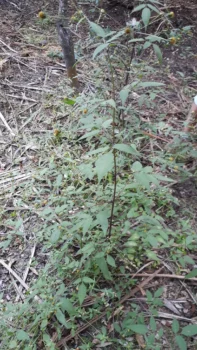
Devil’s Beggartick: The Underappreciated Native Annual That Wildlife Loves
If you’ve ever gone for a late-season hike and found your clothes covered in tiny, clingy seeds, you’ve likely met devil’s beggartick (Bidens frondosa). While this native annual might not win any beauty contests, it’s a hardworking plant that deserves a second look from gardeners interested in supporting local wildlife and creating sustainable landscapes.
What is Devil’s Beggartick?
Devil’s beggartick is an annual plant that can reach up to 4 feet tall with a rapid growth rate. True to its common name, this plant produces seeds with barbed tips that readily attach to anything that brushes against them – a clever evolutionary strategy for seed dispersal. The plant features small yellow flowers that bloom from late summer into fall, though they’re not particularly showy. Don’t let its humble appearance fool you, though – this native wildflower plays an important ecological role.
Where Does It Grow?
Devil’s beggartick is native to most of the lower 48 United States and has naturalized in many parts of Canada. You can find it growing naturally from coast to coast, including Alabama, California, Florida, Maine, Texas, Washington, and everywhere in between. It’s been introduced in Alaska and some western regions where it has established self-sustaining populations.
- Species observed
- No observations
Why Consider Growing Devil’s Beggartick?
While devil’s beggartick might not be the star of your flower border, it offers several compelling benefits for the eco-conscious gardener:
- Late-season pollinator support: Its yellow flowers bloom when many other nectar sources are winding down, providing crucial food for bees, flies, and small butterflies preparing for winter
- Native plant credentials: As a widespread native species, it supports local ecosystems and wildlife that co-evolved with it
- Wetland tolerance: Classified as a facultative wetland plant, it thrives in moist conditions where other plants struggle
- Low maintenance: Once established, it requires minimal care and will often self-seed for next year’s display
- Wildlife habitat: The seeds provide food for birds, and the plant structure offers shelter for beneficial insects
Where to Use Devil’s Beggartick in Your Landscape
Devil’s beggartick isn’t suited for formal gardens or high-visibility areas, but it excels in several specific landscape situations:
- Rain gardens and bioswales: Its tolerance for wet conditions makes it perfect for managing stormwater
- Naturalized meadows: Blends well with other native wildflowers in informal settings
- Wildlife habitat areas: Excellent choice for dedicated wildlife gardens or conservation areas
- Pond or stream edges: Thrives in the moist conditions near water features
- Back-of-border plantings: Can provide late-season interest in areas where its tendency to self-seed won’t be problematic
Growing Conditions and Care
Devil’s beggartick is remarkably adaptable, though it has some preferences:
- Soil: Adapts to coarse and medium-textured soils; pH range of 5.2-7.2
- Moisture: Prefers consistently moist conditions but can tolerate some variation
- Light: Grows best in full sun but tolerates partial shade
- Hardiness: As an annual, it can be grown in USDA zones 3-10
- Temperature: Needs at least 80 frost-free days to complete its life cycle
Planting and Propagation
Growing devil’s beggartick is refreshingly straightforward:
- From seed: Direct sow seeds in spring after danger of frost has passed
- Seed quantity: With approximately 195,300 seeds per pound, a little goes a long way
- No special treatment needed: Seeds don’t require cold stratification or other pre-treatment
- Self-seeding: Once established, plants will likely self-seed for following years
- Commercial availability: Seeds are routinely available from native plant suppliers
Managing Devil’s Beggartick
While devil’s beggartick is generally well-behaved, there are a few things to keep in mind:
- Seed dispersal: Those clingy seeds can spread the plant to new areas, so consider this when planning placement
- Height management: The plant can reach 4 feet tall, so position it where this won’t overwhelm smaller plants
- Seasonal cleanup: Since it doesn’t resprout and has no leaf retention, plan for seasonal cleanup or leave standing for winter wildlife interest
The Bottom Line
Devil’s beggartick may not be the flashiest choice for your garden, but it’s a solid, reliable native plant that punches above its weight in terms of ecological value. If you have a rain garden, naturalized area, or wildlife habitat space that could use a hardy, late-blooming native annual, devil’s beggartick deserves serious consideration. Just remember to place it thoughtfully, as those sticky seeds have a way of ensuring this plant finds new homes whether you planned it or not!
For gardeners seeking more ornamental alternatives with similar ecological benefits, consider pairing devil’s beggartick with other native late-season bloomers like New England aster or goldenrod in naturalized plantings where its functional beauty can truly shine.