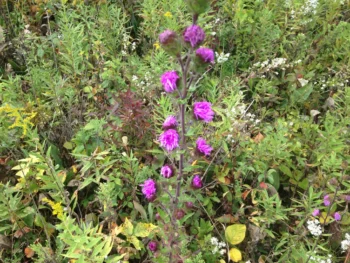
Devil’s Bite: A Native Wildflower That’s Anything But Devilish
Don’t let the ominous name fool you – devil’s bite (Liatris scariosa) is actually an angelic addition to any native garden. This striking perennial wildflower brings late-season color and pollinator power to landscapes across much of eastern North America, proving that sometimes the best garden residents are the ones that have been here all along.
What Makes Devil’s Bite Special?
Devil’s bite is a native forb – essentially a non-woody perennial plant – that calls the eastern United States home. Unlike many of its garden neighbors, this plant lacks significant woody tissue above ground, instead relying on underground buds to return year after year with reliable enthusiasm.
What really sets devil’s bite apart is its unusual blooming habit. While most flowers open from bottom to top, this rebel blooms from the top down, creating a unique cascading effect of purple-pink flowers along tall, slender spikes. It’s like nature’s own purple fountain!
Where Devil’s Bite Calls Home
This adaptable native thrives across an impressive range of states: Alabama, Arkansas, Connecticut, Delaware, Georgia, Illinois, Indiana, Maine, Maryland, Massachusetts, Michigan, Missouri, New Hampshire, New Jersey, New York, North Carolina, Ohio, Pennsylvania, Rhode Island, South Carolina, Tennessee, Virginia, West Virginia, and Wisconsin. That’s quite the travel resume!
- Species observed
- No observations
Growing Conditions: Less Fuss, More Flowers
One of devil’s bite’s most endearing qualities is its low-maintenance personality. This prairie native is surprisingly adaptable, thriving in USDA hardiness zones 3-8. Here’s what it loves:
- Full sun exposure
- Well-drained soils (it particularly enjoys sandy or rocky conditions)
- Dry to moderately moist conditions
- Upland sites – it’s not a wetland fan in most regions
The wetland status varies by region, but generally speaking, devil’s bite prefers to keep its feet dry. In most areas, it’s classified as obligate upland, meaning it almost never occurs in wetlands.
Why Your Garden (and Local Wildlife) Will Thank You
Devil’s bite isn’t just a pretty face – it’s a pollinator powerhouse. The late summer and fall blooms provide crucial nectar when many other flowers have called it quits for the season. Butterflies, bees, and other pollinators flock to these purple spikes, making your garden a bustling hub of activity just when you thought the show was over.
Beyond the pollinator benefits, devil’s bite serves as an important wildlife resource, though specific details about which creatures rely on it most aren’t well-documented in scientific literature.
Design Ideas: Where Devil’s Bite Shines
This versatile native works beautifully in several garden styles:
- Prairie and meadow gardens
- Native plant landscapes
- Pollinator gardens
- Naturalized areas
- Low-maintenance xeriscapes
The tall, slender flower spikes add vertical interest and work especially well as backdrop plants or scattered throughout informal plantings for a natural, meadow-like feel.
Planting and Care Tips
Growing devil’s bite successfully is refreshingly straightforward:
- Start from seed in fall or early spring, or plant divisions from established clumps
- Choose a sunny location with good drainage
- Once established, water sparingly – this plant prefers life on the dry side
- Cut back spent flower stalks in late winter or early spring
- Divide clumps every 3-4 years if desired, though it’s perfectly happy left alone
The beauty of native plants like devil’s bite is that they’re already perfectly adapted to your local conditions. Once established, they typically require minimal intervention, leaving you more time to enjoy their natural charm.
The Bottom Line
Devil’s bite proves that native doesn’t mean boring. With its striking late-season blooms, pollinator appeal, and easy-going nature, this perennial deserves a spot in any garden celebrating North American flora. Plus, you’ll have the satisfaction of knowing you’re supporting local ecosystems while creating a beautiful, sustainable landscape.
So why not give devil’s bite a chance? Your garden – and the butterflies – will thank you for it.