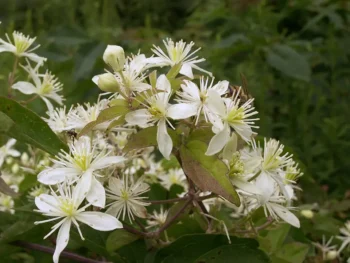
Devil’s Darning Needles: A Native Climbing Beauty for Your Garden
If you’re looking for a native vine that combines wild beauty with garden-worthy appeal, meet devil’s darning needles (Clematis virginiana). Don’t let the intimidating name fool you – this charming native clematis is actually a gardener’s dream come true, offering months of interest from its fragrant summer blooms to its striking winter seed heads.
What Makes Devil’s Darning Needles Special?
This perennial climbing vine is a true North American native, naturally occurring across a vast range from southeastern Canada down to Florida and west to the Great Plains. You’ll find it thriving in an impressive 43 states and several Canadian provinces, making it one of our most widespread native vines.
Devil’s darning needles grows throughout Alabama, Arkansas, Connecticut, Delaware, Florida, Georgia, Illinois, Indiana, Iowa, Kansas, Kentucky, Louisiana, Maine, Maryland, Massachusetts, Michigan, Minnesota, Mississippi, Missouri, Nebraska, New Hampshire, New Jersey, New York, North Carolina, North Dakota, Ohio, Oklahoma, Pennsylvania, Rhode Island, South Carolina, South Dakota, Tennessee, Texas, Vermont, Virginia, West Virginia, Wisconsin, and the District of Columbia, plus Manitoba, New Brunswick, Nova Scotia, Ontario, Prince Edward Island, and Quebec.
- Species observed
- No observations
Garden Appeal and Landscape Role
What sets this vine apart is its incredible versatility in the landscape. Reaching up to 15 feet in height, devil’s darning needles excels at:
- Covering unsightly fences, sheds, or utility areas
- Creating natural privacy screens
- Adding vertical interest to garden beds
- Naturalizing woodland edges and prairie borders
- Providing late-season color when many plants are fading
The real show begins in mid-summer when clouds of small, fragrant white flowers cover the vine. These aren’t just pretty to look at – they’re magnets for pollinators, providing crucial nectar when many other flowers have finished blooming. As summer transitions to fall, the flowers give way to spectacular feathery seed heads that catch the light and add texture to the winter landscape.
Perfect Garden Settings
Devil’s darning needles shines in several garden styles:
- Cottage gardens: Its informal climbing habit and abundant flowers fit perfectly
- Wildlife gardens: Native status and pollinator appeal make it essential
- Woodland gardens: Thrives in partial shade and naturalized settings
- Prairie edge plantings: Excellent for transitional areas between cultivated and wild spaces
Growing Conditions and Care
One of the best things about this native vine is its adaptability. Devil’s darning needles tolerates a wide range of conditions, making it perfect for gardeners dealing with challenging sites.
Soil preferences: Adapts to medium and fine-textured soils with a pH between 5.0 and 6.8. It prefers consistent moisture but has medium drought tolerance once established.
Light requirements: Thrives in partial shade to full sun, making it perfect for those tricky spots that get dappled light.
Climate needs: Hardy in USDA zones 3-8, this tough vine can handle temperatures as low as -38°F and needs at least 85 frost-free days.
Moisture preferences: As a facultative wetland plant, it’s equally happy in moist and moderately dry conditions, though it performs best with medium moisture levels.
Planting and Care Tips
Getting devil’s darning needles established is relatively straightforward:
- When to plant: Spring or fall are ideal planting times
- Spacing: Allow 6-10 feet between plants for proper air circulation
- Support: Provide a sturdy trellis, fence, or arbor for climbing
- Mulching: Apply 2-3 inches of organic mulch around the base
- Watering: Keep consistently moist the first year; drought tolerant thereafter
Pruning: This vine has a slow to moderate growth rate, so it won’t overwhelm your space. Light pruning in late winter or early spring helps maintain shape and encourages vigorous growth.
Propagation Options
If you want to expand your devil’s darning needles collection, you have several options:
- Seeds (though they have low germination vigor and require cold stratification)
- Cuttings from healthy plants
- Container plants from native plant nurseries
- Bare root plants
Keep in mind that commercial availability can be limited, so you may need to seek out specialized native plant sources.
Wildlife and Ecosystem Benefits
Beyond its garden appeal, devil’s darning needles plays an important ecological role. The flowers provide late-season nectar for bees, butterflies, and other pollinators when food sources are becoming scarce. The seeds, while not produced in large quantities, offer food for small birds and mammals.
Why Choose Devil’s Darning Needles?
This native vine offers the perfect combination of low-maintenance growing, extended seasonal interest, and ecological value. Whether you’re looking to add vertical drama to your garden, support local wildlife, or simply enjoy months of fragrant blooms followed by architectural winter interest, devil’s darning needles delivers on all fronts.
Best of all, by choosing this native vine over non-native alternatives, you’re supporting local ecosystems while creating a beautiful, sustainable landscape that truly belongs in your region. It’s a win-win for both your garden and the environment!