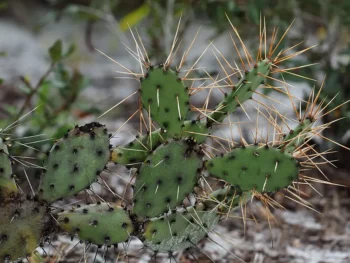
Devil’s-Tongue Prickly Pear: A Spiky Southern Native Worth Growing
If you’re looking for a low-maintenance native plant that can handle the heat and humidity of the Southeast while providing year-round interest, meet the devil’s-tongue prickly pear (Opuntia austrina). Don’t let the dramatic name scare you away – this charming cactus is actually quite well-behaved in the garden and offers unique beauty that’s hard to find in other native plants.
What Is Devil’s-Tongue Prickly Pear?
Devil’s-tongue is a native perennial cactus that grows as a low shrub, typically staying under 13-16 feet tall (though most garden specimens remain much smaller). Like other prickly pears, it features the characteristic flattened pad segments that stack and spread to create interesting sculptural forms. The plant is a true southeastern native, naturally occurring in Alabama, Florida, Mississippi, and Texas.
- Species observed
- No observations
This species goes by several botanical names in older references, including Opuntia compressa var. austrina and Opuntia humifusa var. austrina, but Opuntia austrina is the currently accepted name.
Why Grow Devil’s-Tongue Prickly Pear?
There are several compelling reasons to consider this native cactus for your landscape:
- True native plant: Supporting local ecosystems by growing plants that evolved in your region
- Extremely drought tolerant: Perfect for water-wise gardening and areas with sandy, well-draining soil
- Unique aesthetic appeal: Adds sculptural interest with its distinctive pad structure
- Beautiful flowers: Produces bright yellow blooms in spring and summer
- Wildlife value: Flowers attract pollinators like bees and butterflies
- Low maintenance: Once established, requires minimal care
Garden Design and Landscape Use
Devil’s-tongue prickly pear works wonderfully in several garden styles:
- Native plant gardens: Pairs beautifully with other southeastern natives
- Xeriscaping: Ideal for drought-tolerant landscape designs
- Rock gardens: Complements rocky, well-draining environments
- Coastal gardens: Handles sandy soils and salt exposure well
- Contemporary landscapes: Provides modern, sculptural appeal
Use it as a ground cover, accent plant, or grouped for dramatic impact. The low-growing habit makes it perfect for areas where you want interesting texture without blocking views.
Growing Conditions and Care
Devil’s-tongue prickly pear thrives in USDA hardiness zones 8-10, making it perfect for much of the Southeast. Here’s what it needs to flourish:
Preferred Growing Conditions:
- Sunlight: Full sun (6+ hours daily)
- Soil: Well-draining sandy or rocky soil; avoid clay or areas that stay wet
- Water: Drought tolerant once established; minimal supplemental watering needed
- pH: Adaptable to various soil pH levels
Planting and Care Tips
Getting started with devil’s-tongue prickly pear is easier than you might think:
Planting:
- Plant in spring after the last frost
- Ensure excellent drainage – this is crucial for success
- Space plants 2-3 feet apart to allow for spreading
- Water lightly after planting, then reduce watering frequency
Ongoing Care:
- Water sparingly once established – overwatering is more harmful than drought
- Remove spent or damaged pads with tongs or thick gloves
- No fertilization needed in most soils
- Protect from excessive winter moisture if growing at the edge of its range
Wildlife and Pollinator Benefits
While specific wildlife data for Opuntia austrina is limited, prickly pear cacti in general are valuable for wildlife. The bright yellow flowers attract various pollinators, including native bees and butterflies. The pads and fruits can provide food and shelter for small wildlife, making this plant a useful addition to wildlife-friendly landscapes.
Is Devil’s-Tongue Right for Your Garden?
Devil’s-tongue prickly pear is an excellent choice if you:
- Live in zones 8-10 within its native range
- Have well-draining, sandy soil
- Want a low-maintenance native plant
- Appreciate unique, sculptural plant forms
- Are creating a drought-tolerant landscape
However, it might not be the best fit if you have heavy clay soil, prefer high-water plants, or garden in areas with excessive winter moisture.
With its combination of native status, drought tolerance, and distinctive beauty, devil’s-tongue prickly pear offers gardeners a chance to grow something truly special while supporting local ecosystems. Just remember to wear thick gloves when handling – those spines aren’t called devil’s-tongue for nothing!