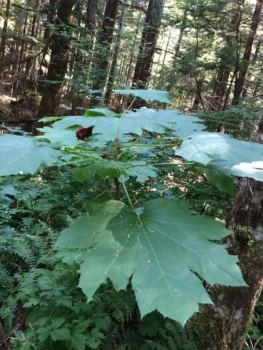
Devil’s Club: A Dramatic Native Shrub for Bold Woodland Gardens
If you’re looking for a plant that makes a statement in your shade garden, Devil’s Club (Oplopanax horridus) might just be your perfect match – assuming you’re brave enough to handle its thorny personality! This native North American shrub is not for the faint of heart, but for adventurous gardeners willing to work with its unique requirements, it offers unparalleled drama and ecological benefits.
What is Devil’s Club?
Devil’s Club is a perennial shrub that belongs to the ginseng family. Don’t let the intimidating common name scare you away – while this plant is indeed covered in formidable thorns, it’s also one of the most architecturally striking native plants you can grow. The shrub typically reaches 4-10 feet in height and spreads 6-8 feet wide, creating an impressive presence in woodland settings.
You might also encounter this plant listed under its botanical synonyms, including Echinopanax horridus or Fatsia horrida, though these names are less commonly used today.
Where Devil’s Club Calls Home
This remarkable shrub is native to Alaska, Canada, and several states in the lower 48, including Idaho, Michigan, Montana, New York, Oregon, and Washington. It’s also found in the Canadian provinces of Alberta, British Columbia, Ontario, and Yukon Territory. In the wild, Devil’s Club thrives in the cool, moist understory of temperate rainforests and mountain woodlands.
- Species observed
- No observations
The Good, The Bad, and The Thorny
Why you might love Devil’s Club:
- Enormous, tropical-looking leaves (up to 14 inches across) that create dramatic texture
- Clusters of small white flowers in early summer that attract pollinators
- Bright red berries in fall that provide food for wildlife
- Exceptional fall color when leaves turn golden yellow
- Strong cultural significance to Indigenous peoples of the Pacific Northwest
- Thrives in challenging shady, moist conditions where other plants struggle
Why you might think twice:
- Covered in sharp thorns on stems and leaf undersides
- Requires very specific growing conditions
- Can be aggressive in spreading once established
- Difficult to move or transplant
- Not suitable for high-traffic garden areas
Growing Conditions and Care
Devil’s Club is hardy in USDA zones 3-7, but success depends heavily on providing the right environment. This plant demands cool, moist conditions that mimic its native forest habitat.
Essential growing requirements:
- Light: Partial to full shade (morning sun okay, but protect from hot afternoon sun)
- Soil: Rich, organic, consistently moist but well-draining soil
- Water: Consistent moisture is crucial – never allow to dry out
- Humidity: High humidity preferred
- Temperature: Cool summers and cold winters
The plant’s wetland status varies by region, from facultative upland to facultative wetland, meaning it can adapt to various moisture levels but generally prefers consistently moist conditions.
Perfect Garden Partners
Devil’s Club shines in woodland gardens, native plant landscapes, and naturalized areas. It pairs beautifully with other Pacific Northwest natives like:
- Western Red Cedar
- Salmonberry
- Wild Ginger
- Trilliums
- Ferns (particularly Sword Fern)
Planting and Maintenance Tips
Spring is the best time to plant Devil’s Club. Choose your location carefully – this isn’t a plant you’ll want to relocate later! Plant in amended soil with plenty of organic matter, and establish a consistent watering routine.
Maintenance is minimal once established, which is good news since pruning requires heavy gloves and long sleeves. Remove dead or damaged canes in late winter if necessary, but otherwise, let this dramatic plant do its own thing.
Wildlife and Pollinator Benefits
Devil’s Club flowers attract various pollinators, including flies, small bees, and other beneficial insects. The bright red berries provide important food for birds and small mammals in fall. The dense growth also offers shelter and nesting sites for wildlife.
Is Devil’s Club Right for Your Garden?
Devil’s Club isn’t for everyone, and that’s perfectly fine! This plant demands respect and specific conditions. It’s ideal for gardeners who:
- Have naturally moist, shaded areas that need bold focal points
- Want to create authentic Pacific Northwest woodland gardens
- Appreciate native plants with cultural and ecological significance
- Don’t mind working around thorny plants (with proper protection)
If you’re up for the challenge and have the right growing conditions, Devil’s Club will reward you with years of dramatic beauty and the satisfaction of growing one of North America’s most distinctive native shrubs. Just remember to invest in a good pair of thick gloves – you’re going to need them!