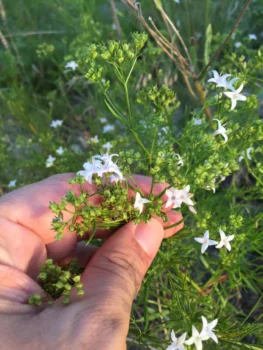
Diamond-Flowers: A Lesser-Known Native Wildflower Worth Knowing About
Meet diamond-flowers (Stenaria nigricans), one of those charming native wildflowers that tends to fly under the radar in the gardening world. While you might not find this perennial herb at your local nursery, it’s worth getting acquainted with this native beauty that quietly calls much of the United States home.
What Exactly Are Diamond-Flowers?
Diamond-flowers belong to that wonderful group of plants we call forbs – essentially, they’re herbaceous flowering plants that aren’t grasses, sedges, or woody plants. Think of them as the classic wildflower: soft-stemmed, perennial plants that come back year after year, with their growing buds tucked safely at or below ground level to survive whatever winter throws their way.
Where You’ll Find This Native Gem
One thing diamond-flowers have going for them is an impressive native range. This species calls home to nearly half the country, naturally occurring across 23 states from the Southeast up through the Midwest and stretching into parts of the West. You can find Stenaria nigricans growing wild in Alabama, Arkansas, Colorado, Florida, Georgia, Illinois, Indiana, Iowa, Kansas, Kentucky, Louisiana, Michigan, Mississippi, Missouri, Nebraska, New Hampshire, New Mexico, Ohio, Oklahoma, South Carolina, Tennessee, Texas, and Virginia.
- Species observed
- No observations
The Reality Check for Home Gardeners
Here’s where we need to have an honest conversation. While diamond-flowers are undeniably native and presumably have ecological value, finding detailed growing information about this species is like searching for a needle in a haystack. This isn’t necessarily a bad thing – it just means this plant hasn’t made the leap from wild spaces into mainstream horticulture.
For most home gardeners looking to add native plants to their landscapes, you might be better served by choosing well-documented native alternatives that are easier to source and grow successfully.
Better Native Options to Consider
If you’re drawn to the idea of native wildflowers but want something with proven garden performance, consider these alternatives that share similar habitats across diamond-flowers’ range:
- Wild bergamot (Monarda fistulosa) – beloved by pollinators
- Purple coneflower (Echinacea purpurea) – classic prairie beauty
- Black-eyed Susan (Rudbeckia species) – cheerful and reliable
- Wild ginger (Asarum canadense) – great for shaded areas
The Bottom Line
Diamond-flowers represent that fascinating category of native plants that are part of our natural heritage but remain mysteries in terms of cultivation. While we can appreciate their place in wild ecosystems across their extensive range, practical gardening wisdom suggests focusing your native plant energy on species with established cultivation practices and readily available plants or seeds.
That said, if you happen to spot diamond-flowers growing wild in your area, take a moment to appreciate this under-documented native. Every plant has its place in the ecosystem, even if that place isn’t necessarily in our backyard gardens – at least not yet!