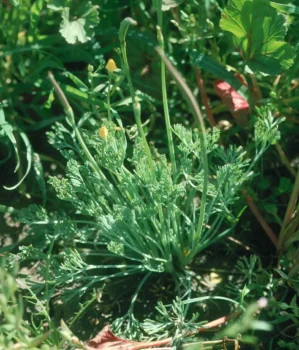
Diamondpetal California Poppy: A Rare Native Gem Worth Protecting
Meet the diamondpetal California poppy (Eschscholzia rhombipetala), one of California’s most elusive native wildflowers. While its famous cousin, the California poppy, paints hillsides golden across the state, this lesser-known relative exists in just a handful of locations, making it a true botanical treasure.
What Makes This Poppy Special?
The diamondpetal California poppy is an annual forb – basically a soft-stemmed plant that completes its entire life cycle in one growing season. Like other members of the poppy family, it likely produces cheerful, cup-shaped flowers that close at night and on cloudy days, though specific details about this rare species are scarce in botanical literature.
What we do know is that this plant is critically imperiled, earning a Global Conservation Status of S1. This means there are typically only five or fewer known occurrences of this species, with fewer than 1,000 individual plants remaining in the wild. That’s rarer than many endangered animals!
Where Does It Call Home?
This native California endemic has an extremely limited range within the Golden State. Unlike the widespread California poppy that thrives throughout the state and beyond, the diamondpetal California poppy clings to existence in just a few precious locations.
- Species observed
- No observations
Should You Grow It in Your Garden?
Here’s where things get complicated. While we’d love to encourage growing every beautiful native plant, the diamondpetal California poppy’s critically imperiled status puts it in a special category. If you’re considering adding this rare beauty to your garden, please keep these important points in mind:
- Only source seeds or plants from reputable conservation organizations or botanical gardens
- Never collect from wild populations – this could push the species closer to extinction
- Consider growing it as part of a conservation effort rather than just garden decoration
- Connect with local native plant societies or conservation groups who might have ethical propagation programs
Better Alternatives for Your Garden
If you’re drawn to the charm of California poppies but want to be environmentally responsible, consider these more common native alternatives:
- California poppy (Eschscholzia californica) – the state flower and readily available
- Desert poppy (Eschscholzia glyptosperma) – another native species with wider distribution
- Other native California annuals like baby blue eyes or farewell-to-spring
Growing Conditions and Care
While specific growing requirements for the diamondpetal California poppy aren’t well-documented due to its rarity, it likely shares similar needs with other Eschscholzia species. These typically prefer:
- Well-draining, sandy or rocky soils
- Full sun exposure
- Mediterranean climate conditions
- Minimal water once established
- Direct seeding in fall or early spring
Supporting Conservation
The best way to help the diamondpetal California poppy is by supporting habitat conservation efforts. Consider donating to organizations working to protect California’s native plant communities, participating in citizen science projects, or volunteering with local conservation groups.
Sometimes the most beautiful way to appreciate a rare plant is to know it exists and work to keep it that way for future generations. The diamondpetal California poppy reminds us that not every treasure is meant for our gardens – some are meant to remain wild, rare, and wonderful in their natural homes.
The Bottom Line
While the diamondpetal California poppy is undoubtedly a fascinating native plant, its critically imperiled status means it’s better admired from afar and supported through conservation efforts rather than home cultivation. If poppies have captured your heart, there are plenty of other native California species that can bring that same golden magic to your garden without putting rare plants at risk.