Dibaeis baeomyces: The Tiny Coral Lichen That Adds Natural Color to Your Landscape
Have you ever noticed tiny, coral-pink spots dotting bare soil along roadsides or in disturbed areas of your yard? You might be looking at Dibaeis baeomyces, a fascinating lichen that brings unexpected splashes of color to otherwise barren ground. While you can’t exactly plant this little beauty in your garden bed, understanding what it is and appreciating its role can help you become a better steward of the natural processes happening right in your own backyard.
What Exactly Is Dibaeis baeomyces?
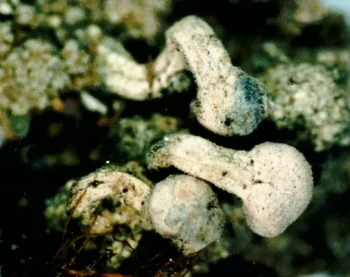
Dibaeis baeomyces is a lichen – not a plant, but rather a remarkable partnership between a fungus and algae working together. This collaboration creates those eye-catching, coral-pink to reddish structures called podetia that look almost like tiny underwater coral formations sprouting from the soil.
You might also encounter this species under its former scientific names, including Baeomyces fungoides, Baeomyces roseus, or Dibaeis rosea. The scientific community has shuffled the naming around a bit over the years, but the charming coral-like appearance remains unmistakable.
Where You’ll Find This Native Beauty
This lichen is native to North America and can be found across a wide range from Canada down through the United States. It’s particularly fond of acidic, nutrient-poor soils and often appears in disturbed areas like roadsides, construction sites, bare patches in yards, and woodland edges.
How to Identify Dibaeis baeomyces
Spotting this lichen is easier than you might think once you know what to look for:
- Small coral-pink to reddish fruiting structures (podetia) rising from a crusty, grayish base
- Podetia are typically 2-8mm tall and have a coral-like, branched appearance
- Found on bare, acidic soil rather than on rocks or tree bark
- Often appears in clusters, creating small patches of color
- Most visible when the coral-colored fruiting bodies are present
Is This Lichen Beneficial for Your Garden?
While Dibaeis baeomyces won’t directly benefit your vegetable garden or flower beds, it plays several important ecological roles that make it a welcome sight in naturalized areas:
- Helps stabilize soil and prevent erosion on bare ground
- Contributes to soil building by slowly breaking down and adding organic matter
- Serves as an indicator of healthy air quality (lichens are sensitive to pollution)
- Adds natural beauty and biodiversity to disturbed or transitional landscapes
- Provides habitat for tiny invertebrates
Can You Cultivate Dibaeis baeomyces?
Here’s where things get interesting – you can’t really plant or cultivate lichens in the traditional sense. They appear naturally when the right conditions align, which includes the proper fungal spores, algae, soil chemistry, and environmental factors. Attempting to transplant or encourage lichen growth rarely succeeds and can actually harm existing colonies.
Instead of trying to cultivate it, the best approach is to:
- Appreciate it when it appears naturally on your property
- Avoid disturbing areas where it’s established
- Minimize the use of fertilizers and chemicals that might alter soil chemistry
- Allow some areas of your landscape to remain naturalized
Creating Lichen-Friendly Conditions
If you’d like to encourage natural lichen diversity (including potentially Dibaeis baeomyces) in appropriate areas of your property, consider:
- Maintaining areas with acidic, lean soils
- Avoiding over-fertilization in naturalized zones
- Reducing chemical inputs that might harm these sensitive organisms
- Allowing some bare or sparsely vegetated areas to exist
- Improving air quality around your property
The Bottom Line
Dibaeis baeomyces might not be something you can add to your shopping list at the garden center, but it’s definitely worth appreciating when it shows up naturally. These tiny coral-colored lichens are indicators of healthy ecosystems and add unexpected beauty to otherwise unremarkable patches of bare soil. Rather than trying to control every inch of your landscape, consider leaving some space for nature’s own decorating – you might be surprised by the small wonders that appear, including these charming little coral lichens.
Next time you’re walking around your property or through your neighborhood, keep an eye out for those distinctive pink-coral bumps on bare soil. You’ll be spotting one of nature’s most successful partnerships in action!