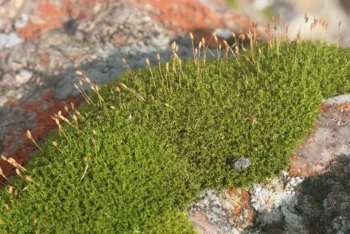
Dicranoweisia Moss: A Tiny Native Wonder for Your Garden
If you’ve ever taken a close look at the rocks or fallen logs in a shaded woodland area, you might have spotted a small, unassuming moss that seems to disappear when dry but springs to life with moisture. Meet dicranoweisia moss (Dicranoweisia crispula), a fascinating native bryophyte that’s been quietly doing its job in North American ecosystems for countless years.
What Exactly Is Dicranoweisia Moss?
Dicranoweisia moss is a terrestrial bryophyte – one of those ancient, non-flowering plants that includes mosses, liverworts, and hornworts. Unlike your typical garden plants, this little moss doesn’t have true roots, stems, or leaves in the traditional sense. Instead, it forms small cushions or mats that cling to rocks, soil, or decaying wood with tiny structures called rhizoids.
What makes this moss particularly interesting is its remarkable ability to curl and twist its leaves when dry, earning it a reputation as a bit of a shape-shifter in the moss world. When moisture returns, it quickly unfurls and returns to its vibrant green state.
Where You’ll Find This Native Beauty
As a native North American species, dicranoweisia moss has established itself across a wide range of habitats throughout the continent. You’re most likely to encounter it in boreal and temperate regions, where it thrives in the cool, moist conditions it loves best. This hardy little moss can handle quite a range of climates, making it at home anywhere from USDA zones 2 through 8.
Is Dicranoweisia Moss Beneficial in Gardens?
Absolutely! While it might not have the showy flowers that attract pollinators, dicranoweisia moss brings several valuable benefits to garden ecosystems:
- Natural groundcover: It provides living carpet coverage in areas where traditional plants might struggle
- Moisture retention: Like a tiny sponge, it helps retain moisture in the soil
- Habitat creation: It offers shelter and foraging opportunities for small invertebrates, which in turn feed birds and other wildlife
- Erosion control: Its mat-like growth helps stabilize soil on slopes and around rocks
- Air purification: Like all mosses, it contributes to cleaner air by capturing dust and particles
How to Identify Dicranoweisia Moss
Spotting dicranoweisia moss in your garden or local woodland is like finding a tiny treasure. Here’s what to look for:
- Size: Forms small cushions or patches, typically just a few centimeters across
- Color: Bright to dark green when moist, often appearing grayish or brownish when dry
- Texture: The leaves are notably curled and twisted when dry, giving it a somewhat crimped appearance
- Habitat: Most commonly found on rocks, soil, or decaying wood in shaded, moist areas
- Growing pattern: Often grows in colonies, creating larger patches over time
Encouraging Moss in Your Garden
While you can’t exactly plant dicranoweisia moss like you would a perennial, you can certainly create conditions that welcome it and other native mosses to your garden naturally:
- Maintain shaded, consistently moist areas
- Avoid using chemical fertilizers and pesticides in potential moss habitats
- Leave some areas of your garden wild with rocks, logs, or undisturbed soil
- Consider reducing foot traffic in areas where moss naturally appears
- Be patient – moss colonization is a slow, natural process
The Bottom Line
Dicranoweisia moss might be small, but it’s a mighty contributor to healthy, diverse garden ecosystems. As a native species, it’s perfectly adapted to North American conditions and requires no special care once established. Whether it appears naturally in your rock garden or woodland area, or you simply spot it during nature walks, this little moss deserves appreciation for its quiet but important role in our native plant communities.
Rather than seeing it as something to remove, consider dicranoweisia moss a sign of a healthy, balanced garden environment – and maybe take a moment to marvel at how something so tiny can be so perfectly designed for survival.