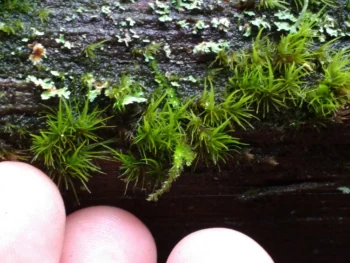
Dicranum Moss: A Native Carpet for Your Woodland Garden
If you’ve ever wandered through a cool, misty forest and noticed those lush, velvety green carpets covering rocks and fallen logs, you’ve likely encountered dicranum moss. Scientifically known as Dicranum tauricum, this native North American moss brings the serene beauty of the forest floor right to your backyard.
What Exactly is Dicranum Moss?
Dicranum moss is a terrestrial bryophyte – fancy talk for a small, non-flowering plant that loves to hug the ground. Unlike your typical garden plants, this little green wonder doesn’t have roots in the traditional sense. Instead, it anchors itself with tiny thread-like structures and absorbs moisture and nutrients directly through its leaves. Think of it as nature’s own living sponge!
This moss forms dense, cushiony mats that can transform any shady corner into a miniature woodland scene. Its glossy green appearance stays relatively consistent throughout the growing season, providing year-round interest in your garden.
Where Does It Call Home?
Dicranum tauricum is proudly native to North America, with its natural range spanning the northern and mountainous regions of the continent. You’ll find it thriving in boreal forests and subalpine areas where cool, moist conditions prevail.
Is Dicranum Moss Beneficial for Your Garden?
Absolutely! This native moss brings several benefits to your landscape:
- Erosion control: Its dense mat formation helps stabilize soil on slopes and prevents erosion
- Moisture retention: Acts like a natural mulch, keeping soil moist and cool
- Wildlife habitat: Provides shelter for tiny creatures like springtails and other beneficial microorganisms
- Low maintenance: Once established, it requires minimal care compared to traditional ground covers
- Air purification: Like all mosses, it helps filter air and can indicate good environmental conditions
Perfect Spots for Dicranum Moss
This moss is ideal for:
- Woodland and shade gardens
- Rock gardens and naturalistic landscapes
- Areas between stepping stones
- Cool, north-facing slopes
- Around the base of trees and shrubs
It thrives in USDA hardiness zones 2-6, making it perfect for gardeners in cooler climates who want a reliable, native ground cover.
How to Identify Dicranum Moss
Spotting dicranum moss in the wild (or determining if it’s already growing in your garden) is easier than you might think:
- Growth pattern: Forms dense, cushion-like patches rather than sprawling loosely
- Color: Rich, glossy green that maintains its vibrancy in cool weather
- Texture: Soft and velvety to the touch, with a slightly springy feel
- Location: Often found on rocks, rotting wood, or acidic soil in shaded areas
- Moisture preference: Always found in consistently moist (but not waterlogged) conditions
Creating the Right Conditions
While you can’t exactly plant moss like a traditional perennial, you can certainly encourage its growth:
- Shade is key: Dicranum moss prefers filtered light to full shade
- Keep it cool and moist: Consistent moisture without waterlogging is essential
- Acidic conditions: This moss loves slightly acidic soil or growing surfaces
- Good air circulation: While it likes humidity, stagnant air can cause problems
The Bottom Line
Dicranum moss is like having a piece of pristine wilderness in your backyard. It’s low-maintenance, environmentally beneficial, and adds that coveted natural look that many gardeners strive for. Plus, since it’s native to North America, you’re supporting local ecosystems while creating a beautiful landscape.
Whether it appears naturally in your garden or you encourage its growth by creating the right conditions, dicranum moss is a wonderful addition to any woodland or naturalistic landscape design. Just remember – patience is key with moss. It grows slowly but surely, creating a lasting carpet of green that will make your garden feel like a peaceful forest retreat.