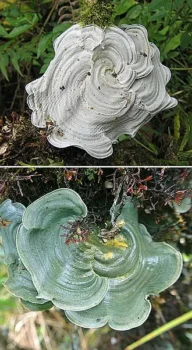
Dictyonema Lichen: A Fascinating Natural Garden Visitor
If you’ve ever noticed thin, crusty blue-green patches mysteriously appearing on the bark of trees in your garden, you might have encountered the dictyonema lichen (Dictyonema glabratum). This intriguing organism isn’t actually a plant at all, but rather a unique partnership between fungi and algae that creates one of nature’s most successful collaborations.
What Exactly Is Dictyonema Lichen?
Dictyonema lichen belongs to a fascinating group of organisms that blur the lines between the plant and fungal kingdoms. Technically speaking, lichens are composite organisms made up of a fungus living in a mutually beneficial relationship with algae or cyanobacteria. The fungus provides structure and protection, while the algae produce food through photosynthesis – it’s like having a tiny solar panel and shelter system all rolled into one!
You might also see this species referred to by its scientific synonyms, including Cora pavonia or Dictyonema pavonium, in older field guides or research papers.
Where Does It Call Home?
This native North American lichen has made itself quite comfortable in the southeastern United States, with a particular fondness for Florida and other Gulf Coast states. Its range extends into tropical regions of Central and South America, where the warm, humid conditions provide the perfect environment for this moisture-loving organism.
In its preferred zones (typically USDA hardiness zones 8-11), dictyonema lichen thrives in the subtropical and tropical climates that provide the consistent humidity it needs to survive.
Spotting Dictyonema Lichen in Your Garden
Identifying dictyonema lichen is easier than you might think once you know what to look for:
- Look for thin, crusty patches that appear blue-green to gray in color
- It typically forms sheet-like growths on tree bark, particularly on smooth-barked trees
- The surface often appears somewhat wrinkled or textured
- You’ll most commonly find it on the trunks and larger branches of trees
- Occasionally, it may also appear on rock surfaces in suitable environments
Is It Good for Your Garden?
Here’s where things get interesting – while you can’t exactly plant dictyonema lichen like you would a flower or shrub, its presence in your garden is actually a positive sign! Lichens are incredibly sensitive to air pollution and environmental changes, so finding them growing naturally on your trees indicates that you have relatively clean, healthy air in your garden space.
From an ecological standpoint, dictyonema lichen provides several subtle benefits:
- It serves as a natural air quality indicator
- Provides microhabitat for tiny insects and arthropods
- May offer nesting materials for some small creatures
- Adds natural texture and color variation to tree bark
- Contributes to the overall biodiversity of your garden ecosystem
The Hands-Off Approach to Lichen Gardening
Unlike traditional garden plants, dictyonema lichen can’t be cultivated through conventional planting methods. It establishes itself naturally when conditions are right, requiring high humidity, clean air, and suitable surfaces to colonize. The best thing you can do to encourage lichen diversity in your garden is to maintain a healthy, unpolluted environment and avoid using harsh chemical treatments on your trees.
If you’re lucky enough to have dictyonema lichen appear in your garden naturally, consider it nature’s stamp of approval on your environmental stewardship. These slow-growing organisms take time to establish, so their presence indicates that your garden provides stable, suitable conditions for sensitive species.
Living Alongside Your Lichen Neighbors
The beauty of dictyonema lichen lies in its ability to add subtle natural artistry to your garden without requiring any effort on your part. These hardy organisms will continue to slowly spread and develop as long as conditions remain favorable, creating ever-changing patterns on tree bark that shift with the seasons and weather conditions.
So the next time you spot those distinctive blue-green patches on your trees, take a moment to appreciate this remarkable example of natural cooperation. You’re witnessing one of nature’s most successful partnerships – and getting a thumbs up that your garden is a healthy place for wildlife to thrive!