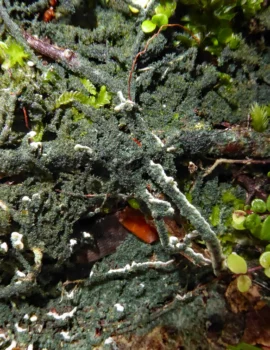
Dictyonema Lichen: The Fascinating Blue-Green Crust in Your Garden
If you’ve ever noticed thin, papery, blue-green patches growing on tree bark or rocks in your garden, you might have encountered the intriguing dictyonema lichen (Dictyonema sericeum). This isn’t your typical garden plant – it’s actually a lichen, which makes it a completely different type of organism altogether!
What Exactly Is Dictyonema Lichen?
Here’s where things get really interesting: dictyonema lichen isn’t a plant at all. It’s a lichen, which is essentially a partnership between a fungus and an algae living together in perfect harmony. Think of it as nature’s ultimate roommate situation – the fungus provides structure and protection, while the algae handles the food production through photosynthesis.
Dictyonema sericeum appears as thin, crusty patches that can range from blue-green to grayish in color. These patches have a papery texture and tend to grow flat against their host surface, whether that’s tree bark, rocks, or other suitable substrates.
Where You’ll Find This Native Wonder
This fascinating lichen is native to North America, specifically found in tropical and subtropical regions of the Americas. You’re most likely to spot it in warmer, more humid areas where it can thrive on the bark of trees and rock surfaces.
Is Dictyonema Lichen Beneficial for Your Garden?
While you can’t plant or cultivate dictyonema lichen (more on that in a moment), its presence in your garden is actually a wonderful sign! Here’s why you should appreciate having it around:
- Environmental indicator: Lichens are sensitive to air pollution, so their presence suggests you have relatively clean air in your garden
- Ecosystem support: They contribute to the overall biodiversity of your outdoor space
- Natural beauty: These blue-green crusts add subtle texture and color to tree bark and rocks
- Soil building: Over time, lichens help break down rock surfaces, contributing to soil formation
How to Identify Dictyonema Lichen
Spotting dictyonema lichen is all about knowing what to look for:
- Thin, crusty patches that lie flat against surfaces
- Blue-green to gray coloration
- Papery or parchment-like texture
- Found primarily on tree bark and rock surfaces
- No visible stems, leaves, or flowers (remember, it’s not a plant!)
Why You Can’t Grow It (And Why That’s Okay)
Here’s the thing about lichens – they’re not something you can simply plant in your garden. Dictyonema lichen grows naturally when the right fungal and algal partners find each other and the perfect environmental conditions align. This process can’t be replicated through traditional gardening methods.
Instead of trying to cultivate it, the best approach is to create conditions that welcome lichens naturally:
- Maintain good air quality around your property
- Avoid using harsh chemicals near trees and rocks
- Preserve mature trees with interesting bark textures
- Keep some natural rock features in your landscape
Appreciating Nature’s Partnerships
The next time you’re strolling through your garden and notice those blue-green crusty patches on your trees or rocks, take a moment to appreciate the remarkable partnership you’re witnessing. Dictyonema lichen represents millions of years of evolutionary cooperation – a living example of how different organisms can work together to thrive in challenging environments.
While you might not be able to plant dictyonema lichen like you would a flowering perennial, its spontaneous appearance in your garden is something to celebrate. It’s nature’s way of saying your outdoor space is healthy, diverse, and full of fascinating life forms that exist beyond the typical plants we usually think about.