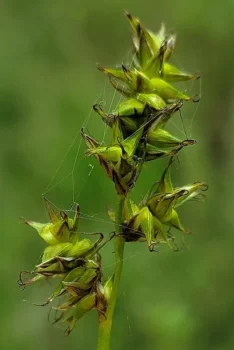
Dioecious Sedge: A Hidden Gem for Wetland Gardens
If you’re looking to add authentic native character to your wetland garden or rain garden, dioecious sedge (Carex sterilis) might just be the unsung hero you’ve been searching for. This humble perennial sedge may not win any flashy flower contests, but it plays a crucial role in North American wetland ecosystems and can be a valuable addition to the right garden setting.
What is Dioecious Sedge?
Dioecious sedge is a native North American perennial that belongs to the sedge family (Cyperaceae). As a grass-like plant, it forms small tufts of narrow green leaves topped with inconspicuous brownish flower spikes. Don’t let its modest appearance fool you – this little sedge is perfectly adapted to life in wet places and has been thriving in North American wetlands for thousands of years.
Where Does Dioecious Sedge Grow?
This hardy sedge has an impressive native range across northern North America. You’ll find it growing naturally from coast to coast in Canada, including Manitoba, Ontario, Quebec, Saskatchewan, Northwest Territories, Nunavut, and Newfoundland. In the United States, it extends through the northern states and down into suitable wetland habitats as far south as Alabama and Tennessee, with populations in Connecticut, Illinois, Indiana, Iowa, Maine, Massachusetts, Michigan, Minnesota, Missouri, Montana, New Jersey, New York, North Dakota, Ohio, Pennsylvania, Rhode Island, Virginia, West Virginia, and Wisconsin.
- Species observed
- No observations
Important Conservation Note
Before you get too excited about adding dioecious sedge to your garden, there’s something important to know. This plant has a rarity status of S2 (Highlands Listed) in New Jersey, meaning it’s quite uncommon in that region. If you’re interested in growing this sedge, please make sure you source it responsibly from reputable native plant nurseries rather than collecting it from wild populations. This helps protect existing populations while still allowing you to enjoy this special plant in your garden.
Why Grow Dioecious Sedge?
While dioecious sedge might not be the showiest plant in your garden, it offers several compelling benefits:
- True native authenticity: This is the real deal – a plant that has been part of North American ecosystems for millennia
- Wetland specialist: Perfect for those tricky wet spots where other plants struggle
- Low maintenance: Once established, it pretty much takes care of itself
- Ecosystem support: Provides habitat and contributes to healthy wetland function
- Natural texture: Adds authentic wild character to naturalistic plantings
Perfect Garden Settings
Dioecious sedge shines in specific garden types where its wetland nature is an asset rather than a challenge:
- Rain gardens and bioswales
- Pond and stream edges
- Bog gardens
- Wetland restoration projects
- Natural or wild landscape areas
- Areas with seasonal flooding
Growing Conditions and Care
This sedge is all about the water – it’s classified as an obligate wetland plant across all regions where it grows, meaning it almost always occurs in wetlands. Here’s what it needs to thrive:
- Moisture: Consistently moist to wet soil is essential – think bog-like conditions
- Light: Full sun to partial shade
- Hardiness: Zones 2-7, making it quite cold-hardy
- Soil: Adapts to various wet soil types
- Tolerance: Can handle seasonal flooding
Planting and Care Tips
Growing dioecious sedge successfully is mainly about getting the water situation right:
- Plant in spring when soil can be worked
- Choose the wettest spot in your garden – seriously, this plant loves it soggy
- Keep soil consistently moist to wet at all times
- Little to no fertilization needed
- Minimal maintenance required once established
- May self-seed in ideal conditions, creating natural colonies
Wildlife and Ecosystem Benefits
While dioecious sedge is wind-pollinated and doesn’t offer nectar to pollinators, it plays important ecological roles. As part of wetland plant communities, it helps maintain healthy water systems, provides habitat structure for small wildlife, and contributes to the complex web of relationships that make wetland ecosystems function.
Is Dioecious Sedge Right for Your Garden?
This sedge is definitely not for every garden or every gardener. If you’re looking for showy flowers or plants for dry, sunny borders, look elsewhere. But if you have wet areas that challenge other plants, want to create authentic wetland habitat, or are working on ecological restoration, dioecious sedge could be a perfect fit.
Just remember to source it responsibly, respect its wetland requirements, and appreciate it for what it is – a humble but important piece of North America’s natural heritage that’s perfectly adapted to life on the water’s edge.