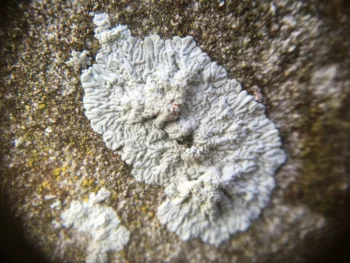
Diploicia Lichen: The Quiet Garden Guardian You Never Knew You Had
If you’ve ever noticed grayish-white crusty patches growing on the bark of your mature trees, you might have been looking at diploicia lichen (Diploicia canescens) without even knowing it! This humble organism is far more fascinating—and beneficial—than most gardeners realize.
What Exactly Is Diploicia Lichen?
Unlike the plants we typically think about when gardening, diploicia lichen isn’t actually a plant at all. It’s a remarkable partnership between a fungus and algae, working together in perfect harmony. The fungus provides structure and protection, while the algae photosynthesizes to create food for both partners. It’s like nature’s ultimate roommate situation!
You might also see this species referred to by its scientific synonym, Buellia canescens, in older field guides and botanical references.
Where You’ll Find This Native Wonder
Diploicia canescens is native to North America and can be found throughout the continent’s temperate regions. It’s particularly fond of settling on tree bark and occasionally on rocks, creating those distinctive grayish-white crusty patches that many gardeners initially mistake for some kind of tree disease.
Identifying Diploicia Lichen in Your Garden
Spotting diploicia lichen is easier than you might think once you know what to look for:
- Grayish-white to pale gray crusty appearance
- Grows directly on tree bark, forming irregular patches
- Texture resembles dried, cracked paint or plaster
- Typically found on the trunks and larger branches of mature trees
- More common on trees in areas with good air quality
Why Diploicia Lichen Is Actually Great for Your Garden
Before you think about scraping this crusty stuff off your trees, here’s why you should celebrate finding diploicia lichen in your garden:
Air Quality Indicator
Lichens are incredibly sensitive to air pollution, so finding healthy populations of diploicia lichen is actually a sign that your garden enjoys good air quality. Think of them as nature’s air quality monitors—and they work for free!
Harmless to Trees
Despite what some worried gardeners think, diploicia lichen doesn’t harm your trees. It’s simply using the bark as a surface to grow on, much like how air plants use other plants for support without causing damage.
Adds Natural Character
These lichens contribute to the natural, established look that many gardeners spend years trying to achieve. They’re particularly valuable in woodland gardens and naturalistic landscape designs where that been here forever aesthetic is desired.
Can You Grow Diploicia Lichen?
Here’s where things get interesting—you can’t actually plant or cultivate diploicia lichen like you would a typical garden plant. These organisms establish themselves naturally when conditions are right. You can’t buy them at the nursery, and you can’t speed up their growth with fertilizer.
What you can do is create conditions that encourage their natural establishment:
- Maintain good air quality around your property
- Allow mature trees to remain undisturbed
- Avoid using harsh chemicals near trees where lichens might grow
- Be patient—lichens grow very slowly and establish over many years
A Garden Partner Worth Appreciating
While diploicia lichen won’t provide nectar for pollinators or showy flowers for your Instagram feed, it offers something perhaps more valuable—a sign that your garden is a healthy, balanced ecosystem. These quiet organisms have been doing their thing for millions of years, and finding them in your landscape means you’re providing habitat that supports some of nature’s most resilient partnerships.
So the next time you spot those grayish-white crusty patches on your trees, take a moment to appreciate these remarkable organisms. They’re not just surviving in your garden—they’re thriving, and that’s something worth celebrating.